 how-to
Avoiding Hidden Costs in Contingency Fee Cases
Table of Contents
- What Hidden Costs Actually Are in Contingency Fee Cases
- Understanding the Contingency Fee Agreement Requirements in California
- How Litigation Costs Are Calculated in Personal Injury Cases
- Negotiating Attorney Fee Percentages and Expense Responsibility
- Red Flags in Fee Agreements You Should Never Ignore
- Gross Settlement vs. Net Recovery: What You Actually Keep
- Steps to Protect Yourself Before Signing a Contingency Contract
- Frequently Asked Questions
Last Updated: September 2, 2026
What Hidden Costs Actually Are in Contingency Fee Cases
A contingency fee arrangement means your attorney receives payment only if you win your case or reach a settlement. But "winning" doesn't mean you keep everything you recover. Hidden costs in contingency fee cases are expenses that reduce your net recovery, the actual money left in your pocket after all fees and costs are paid.
These aren't always hidden by intention. Many clients simply don't ask the right questions before signing, or they don't understand the difference between attorney fees and case expenses. The result is the same: you expected to walk away with $100,000 and instead receive $65,000 because of costs you didn't anticipate.
The key distinction: your attorney's contingency fee percentage (typically 25-40%) is separate from case expenses. Both reduce your final recovery, but they work differently. Understanding this difference is the first step toward protecting yourself.
Understanding the Contingency Fee Agreement Requirements in California
Your contingency fee agreement is a binding contract that governs how your case is handled financially. California law requires specific disclosures in any contingency fee contract for personal injury or wrongful death cases (calbar.ca.gov). The agreement must be in writing and must clearly state the attorney's fee percentage, how case costs are handled, and what happens if the case is lost.

Many attorneys include boilerplate language that technically complies with the law but obscures the real costs you'll face. For example, an agreement might state "client is responsible for all case costs" without itemizing what those costs include or when they're deducted.
The written fee agreement should address these specific points:
- The exact percentage the attorney will take as a fee (and whether this percentage changes if the case settles before trial versus after trial begins)
- Whether case costs are deducted before or after the attorney's fee is calculated
- Which party pays for expert witnesses, investigators, court filings, and medical records
- What happens to costs if you lose the case
- Whether the attorney advances costs or whether you're responsible for them upfront
- How costs are itemized and billed to you
California law also requires that the agreement not be unconscionable, meaning it can't be so one-sided that it shocks the conscience. Courts have struck down agreements where clients bore all costs while attorneys bore none, or where fee percentages were excessive relative to the work performed.
How Litigation Costs Are Calculated in Personal Injury Cases
Litigation costs accumulate quickly, and many clients are shocked by the total when they see an itemized breakdown. These are distinct from your attorney's fee and represent the actual expenses required to investigate, prepare, and litigate your case.
Court Costs and Filing Fees
Every case filed in court incurs filing fees. A typical personal injury case in California might have initial filing fees between $200-$400, with additional fees for motions, discovery, and trial preparation. If your case goes to trial, court costs increase significantly with expert witness fees, court reporter fees for transcripts, and jury fees if applicable.
Your fee agreement should be explicit about who pays these costs. If your attorney advances costs, you're not writing checks while your case is pending. If you're responsible for costs, you may face bills during litigation.
Expert Witness and Investigative Fees
Expert witnesses are often essential in personal injury cases. A medical expert testifying about the extent of your injuries, a biomechanical engineer explaining how an accident occurred, or an economist calculating lost wages, these experts charge significant fees. Expert witness fees typically range from $2,000 to $10,000+ per expert, depending on their credentials and complexity.
Investigative costs cover accident scene investigations, surveillance, background checks on defendants, and witness interviews. A thorough investigation might cost $3,000-$8,000 or more. Medical records and discovery costs typically range from $500-$2,000.
The critical question: who pays these costs if you lose? Many agreements state that the client is responsible for all costs regardless of outcome. This distinction must be in your written agreement.
Negotiating Attorney Fee Percentages and Expense Responsibility
Your attorney's fee percentage is negotiable, though many clients don't realize this. Standard contingency fees in personal injury cases range from 25-40%, with variations based on case complexity, likelihood of success, and whether the case settles or goes to trial.
Many agreements include a tiered fee structure: a lower percentage if the case settles before trial (say, 25%) and a higher percentage if it goes to trial (say, 33-40%). This structure incentivizes settlement, which reduces costs and attorney time.
When negotiating your fee percentage, consider the attorney's experience and track record, case complexity, whether the attorney is advancing costs, the likelihood of recovery, and whether the attorney offers a reduced percentage for quick settlement.
Expense responsibility is equally important. You want an agreement that clearly states the attorney advances all case costs and deducts them from your settlement, costs are itemized and provided regularly, you have the right to approve costs above a certain threshold, and costs are deducted after the attorney's percentage is calculated.
The last point matters significantly. If your settlement is $100,000, your attorney's fee is 33%, and case costs are $10,000:
- Deducting costs first: ($100,000 - $10,000) × 0.33 = $29,700 in fees; you receive $60,300
- Deducting attorney fee first: $100,000 × 0.33 = $33,000 in fees; you receive $56,700 after costs
The difference is $3,600 in your pocket. Always push for costs to be deducted after the attorney's percentage is calculated.
Red Flags in Fee Agreements You Should Never Ignore
Certain language in contingency fee agreements signals potential problems. If you see these red flags, ask for clarification or consider a different attorney.
Vague cost language. An agreement that says "client responsible for all costs" without itemizing or capping them is a red flag. Demand specificity: which costs, how much, when are they deducted, what's the approval process?
Costs deducted before attorney fee. This shifts financial risk to you. Negotiate for costs to be deducted after the fee.
No cost cap or approval threshold. A good agreement includes a provision that costs above a certain amount (e.g., $2,500 for an expert witness) require your written approval.
Broad language about "costs and expenses." Your agreement should list specific categories: court costs, expert witnesses, investigators, medical records, court reporters, and nothing else.
Unclear settlement language. The agreement should define what "settlement" means for purposes of calculating the fee. Does it include insurance proceeds, medical lien reductions, or subrogation claims?
No transparency about cost tracking. You should receive regular invoices showing costs incurred. You have a right to know where your money is going.
Automatic fee increase if case goes to trial. While tiered fees are standard, a dramatic jump can incentivize settlement over aggressive litigation. Negotiate for a more modest increase.
Unclear what happens if you lose. The agreement must state whether you're responsible for costs if the case is dismissed or you lose at trial.
Gross Settlement vs. Net Recovery: What You Actually Keep
Your gross settlement is the total amount awarded or agreed upon. Your net recovery is what's left after all deductions.
Consider a personal injury case with a $250,000 settlement:
- Gross settlement: $250,000
- Attorney fee (33%): -$82,500
- Case costs: -$18,000
- Medical liens: -$25,000
- Subrogation claims: -$15,000
- Net recovery: $109,500
You expected $250,000. You're receiving $109,500. This is a 56% reduction from the gross settlement. Most of this is legitimate, but without understanding the math upfront, clients feel blindsided.
The written fee agreement should include a "settlement scenario" section that walks through this calculation. Your attorney should be able to give you a realistic range based on similar cases.
Some agreements include a "costs cap," a maximum amount you'll be responsible for. Another protective measure is a "net recovery guarantee" where the attorney will reduce their fee if your net recovery falls below a certain amount.
Steps to Protect Yourself Before Signing a Contingency Contract
You have power before you sign. Once you've signed, you're bound by the agreement's terms. Use these steps to protect yourself.
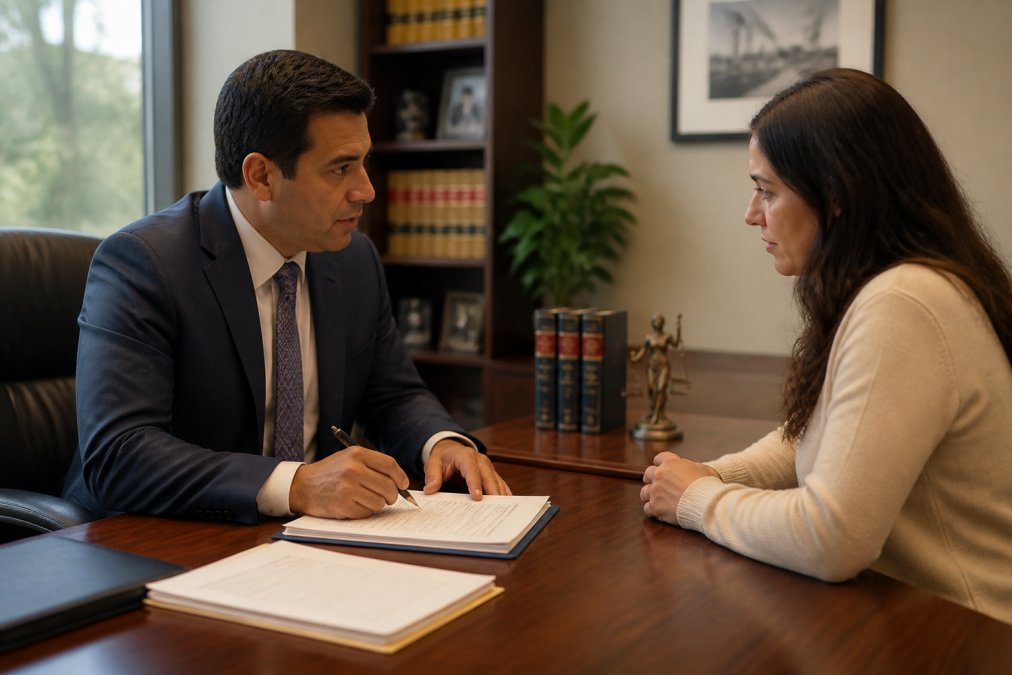
Step 1: Read the entire agreement carefully. Don't skim it. Read every word. If you don't understand something, ask. If your attorney won't explain it clearly, that's a red flag.
Step 2: Ask for a plain-language summary. Request that your attorney summarize the key terms in plain English: the fee percentage, how costs work, what happens if you lose, and what your estimated net recovery might be.
Step 3: Negotiate the fee percentage. Don't accept the first number offered. Even a 2-3% reduction can save you thousands.
Step 4: Get cost details in writing. Demand that the agreement itemize which costs you're responsible for and which the attorney covers. Ask about cost caps and approval thresholds.
Step 5: Clarify the deduction order. Explicitly state in the agreement that case costs are deducted after the attorney's fee is calculated, not before. This single change can significantly increase your net recovery.
Step 6: Ask about cost responsibility if you lose. Get a clear answer: if your case is dismissed or you lose at trial, are you responsible for costs? Make sure this is addressed in writing.
Step 7: Request a cost tracking provision. Include language requiring your attorney to provide itemized cost statements at least quarterly.
Step 8: Discuss settlement strategy. Ask your attorney: "What's your approach to settlement negotiations? At what point would you recommend settling versus going to trial?"
Step 9: Get references or case results. Ask your attorney for references from past clients or information about similar cases they've handled. What were the outcomes?
Step 10: Consider a second opinion. If you're uncertain, consult with another attorney before signing.
| Step | Action | Outcome |
|---|---|---|
| Read carefully | Review entire agreement word-for-word | Identify unclear or unfavorable terms |
| Request summary | Ask for plain-language explanation | Understand key terms and obligations |
| Negotiate fee | Ask if percentage is negotiable | Potentially reduce attorney fee by 2-3% |
| Detail costs | Get itemized list of covered costs | Know exactly what you're responsible for |
| Clarify deduction order | Specify costs deducted after fee | Increase net recovery by thousands |
| Confirm loss responsibility | Get written answer on cost liability | Avoid surprise bills if case fails |
| Cost tracking | Require quarterly statements | Monitor spending and approve major expenses |
| Discuss strategy | Understand settlement approach | Align expectations with attorney's tactics |
| Get references | Ask for past client outcomes | Evaluate attorney's track record |
| Second opinion | Consult another attorney | Confirm agreement is fair and reasonable |
Avoiding hidden costs in contingency fee cases requires vigilance and clear communication before you sign. The time you invest in understanding your fee agreement will save you thousands in unexpected costs and ensure you're maximizing your actual recovery.
At Law Offices of Allen Farshi, we advance all case costs, itemize every expense, and ensure you understand exactly what you're keeping. With over 25 years of experience in aggressive litigation and trial advocacy, we prioritize your net recovery, not just the gross settlement. California State Bar guidelines on attorney ethics and fee agreements provide additional protections, and the American Bar Association's Model Rules of Professional Conduct outline standards for contingency fee agreements that most states follow. For specific questions about your case or fee structure, contact Law Offices of Allen Farshi for a consultation, we'll walk you through every detail and explain exactly how costs and fees work in your situation.
Frequently Asked Questions
What is the difference between attorney fees and litigation costs in a contingency fee case?
Attorney fees are the percentage of your recovery that goes to your lawyer, typically 25% to 40% depending on negotiation and case stage. Litigation costs are the actual expenses required to pursue your case, such as court filing fees, expert witness fees, investigative costs, and administrative charges. These are separate from attorney fees. Understanding this distinction is critical because litigation costs reduce your net recovery, and you need to know upfront whether your attorney advances these costs or bills them to you from your settlement.
Are litigation expenses deducted before or after the attorney's fee percentage is calculated?
This varies by agreement and must be specified in your written fee contract. In some cases, litigation costs are deducted from the gross settlement before the attorney's percentage is calculated, which reduces the amount your lawyer takes as a fee. In others, the attorney's percentage is calculated first on the gross recovery, and then litigation costs are deducted from what remains. The order matters significantly for your net recovery. Always ask your attorney to show you in writing which method applies to your case and request a sample calculation using a realistic settlement figure.
Can I negotiate the percentage of a contingency fee contract?
Yes, contingency fee percentages are negotiable within ethical limits set by the California State Bar. Typical percentages range from 25% to 40%, with lower percentages often available if your case settles before trial and higher percentages if the case goes to trial. Factors that influence negotiation include the strength of your case, the complexity of litigation, whether liability is clear, and the attorney's caseload. Don't accept the first percentage offered, discuss what percentage applies at different stages (pre-settlement, post-filing, post-trial) and ensure this is documented in your written fee agreement.
What should I look for as red flags in a fee agreement before signing?
Red flags include vague language about what costs you're responsible for, agreements that don't specify the percentage at each stage of litigation, provisions allowing the attorney to unilaterally increase the percentage, unclear expense deduction methods, and any fees that aren't itemized. Also watch for agreements that don't address who pays costs if the case is lost, agreements that obligate you to reimburse the attorney's overhead costs beyond actual case expenses, and provisions that allow the attorney to settle without your written consent. A legitimate fee agreement is clear, specific, and protects your right to understand exactly what you owe.
Frequently Asked Questions
What is the difference between attorney fees and litigation costs in a contingency fee case?
Attorney fees are the percentage of your recovery that goes to your lawyer—typically 25% to 40% depending on negotiation and case stage. Litigation costs are the actual expenses required to pursue your case, such as court filing fees, expert witness fees, investigative costs, and administrative charges. These are separate from attorney fees. Understanding this distinction is critical because litigation costs reduce your net recovery, and you need to know upfront whether your attorney advances these costs or bills them to you from your settlement.
Are litigation expenses deducted before or after the attorney's fee percentage is calculated?
This varies by agreement and must be specified in your written fee contract. In some cases, litigation costs are deducted from the gross settlement before the attorney's percentage is calculated, which reduces the amount your lawyer takes as a fee. In others, the attorney's percentage is calculated first on the gross recovery, and then litigation costs are deducted from what remains. The order matters significantly for your net recovery. Always ask your attorney to show you in writing which method applies to your case and request a sample calculation using a realistic settlement figure.
Can I negotiate the percentage of a contingency fee contract?
Yes, contingency fee percentages are negotiable within ethical limits set by the California State Bar. Typical percentages range from 25% to 40%, with lower percentages often available if your case settles before trial and higher percentages if the case goes to trial. Factors that influence negotiation include the strength of your case, the complexity of litigation, whether liability is clear, and the attorney's caseload. Don't accept the first percentage offered—discuss what percentage applies at different stages (pre-settlement, post-filing, post-trial) and ensure this is documented in your written fee agreement.
What should I look for as red flags in a fee agreement before signing?
Red flags include vague language about what costs you're responsible for, agreements that don't specify the percentage at each stage of litigation, provisions allowing the attorney to unilaterally increase the percentage, unclear expense deduction methods, and any fees that aren't itemized. Also watch for agreements that don't address who pays costs if the case is lost, agreements that obligate you to reimburse the attorney's overhead costs beyond actual case expenses, and provisions that allow the attorney to settle without your written consent. A legitimate fee agreement is clear, specific, and protects your right to understand exactly what you owe.