 How-to
HOA Denies Emergency Repairs: Your Next Steps
Table of Contents
- What to Do When Your HOA Denies Emergency Repairs
- Understand HOA Repair Responsibility and Your Rights
- Document the Denial and Preserve Evidence
- Submit a Written HOA Emergency Repair Request Letter
- Take Action to Force HOA to Make Repairs
- File an HOA Repair Denial Appeal
- When to Make Emergency Repairs Yourself
- Know When to Seek Legal Help
- Frequently Asked Questions
Last Updated: October 10, 2026
What to Do When Your HOA Denies Emergency Repairs
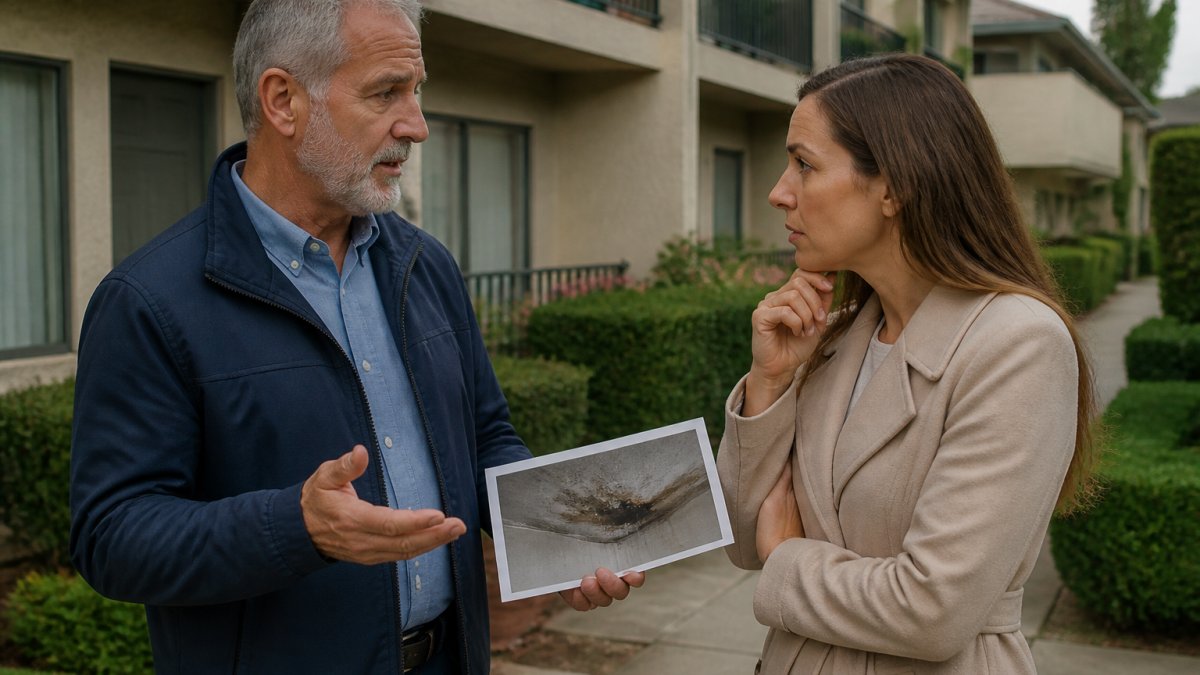
The denial stings. You're facing potential property damage. Your family's safety may be at risk. And the HOA says no.
What happens next determines whether you lose thousands in water damage, whether mold takes hold in your walls, or whether you can act decisively to protect your home.
This guide walks you through exactly what to do when your HOA denies emergency repairs, from documenting the denial to escalating through formal channels and knowing when you can act on your own.
Understand HOA Repair Responsibility and Your Rights
Before you can challenge a denial, you need to know who actually bears responsibility for the repair. This distinction determines whether the HOA's refusal is even legal.
Review Your Governing Documents
Your CC&Rs (Covenants, Conditions & Restrictions), bylaws, and architectural guidelines spell out which repairs belong to the HOA and which fall to you as an individual owner.
Start here:
- Read your CC&Rs carefully, focusing on sections about maintenance obligations
- Check your bylaws for emergency repair procedures
- Review architectural guidelines for any restrictions on repairs
- Look for definitions of "common areas" versus "owner responsibility"
Most CC&Rs divide responsibility clearly. The HOA typically maintains the roof, foundation, exterior walls, and common areas.
But "typically" isn't good enough when your home is flooding. Your documents are the legal truth.
Identify Who Pays for the Repair
Once you know what the documents say, determine whether this repair falls under HOA responsibility or yours.
If the damage is in a common area or affects the building's structural integrity, the HOA bears responsibility.
Document your reasoning in writing. State clearly why this repair qualifies as an emergency and cite the relevant section of your CC&Rs that assigns responsibility.
Document the Denial and Preserve Evidence
The moment an HOA denies your repair request, you enter a paper trail phase. Everything you do from this point forward should be documented, dated, and preserved.
Create a Paper Trail
Your paper trail is your evidence. It shows:
- The severity of the problem
- When you reported it
- How the HOA responded
- What you did to protect your property
Keep copies of everything:
- Your original repair request (email, certified letter, or hand-delivered notice)
- The HOA's written denial
- All follow-up communications
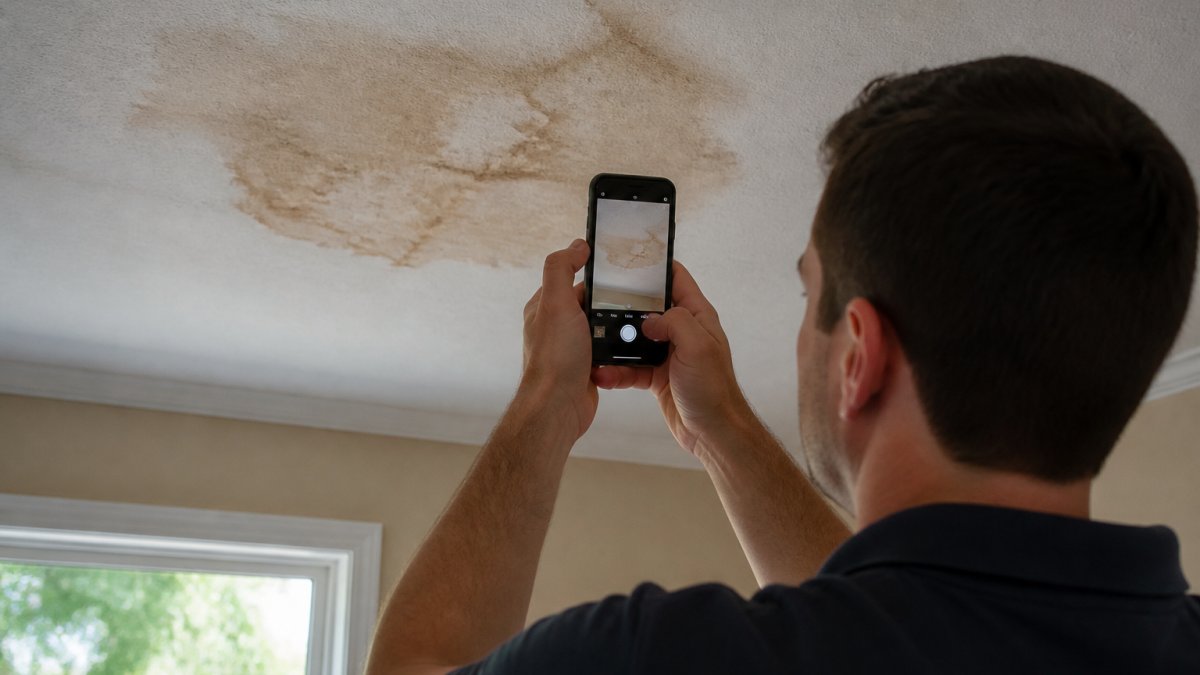
- Photos and videos of the damage
Use certified mail or email with read receipts for formal requests. Never rely on verbal conversations, they're impossible to prove later.
Photograph and Video Evidence
Visual evidence is powerful. It shows the actual condition of your property and the urgency of the repair.
Take photos and videos that show:
- The full extent of the damage
- Close-ups of specific problem areas
- Date stamps on each photo (most smartphones do this automatically)
- Wide shots showing the damage in context of your home
Date each image file. Store originals in a secure location (cloud backup, external drive). Don't edit or enhance photos, use them raw.
Video is particularly useful for showing active damage: water dripping, mold growth, or movement in structural elements.
Submit a Written HOA Emergency Repair Request Letter
If you haven't already submitted a formal written request, do it now. If your initial request was verbal or informal, submit a formal letter that creates an official record.
What to Include in Your Request
Your emergency repair request letter should include:
Call Now for a free consultation →
Identification and urgency:
- Your name, address, and unit number
- A clear statement that this is an emergency repair request
- The date of the request
Description of the damage:
- What is broken or damaged
- When you discovered the problem
- What caused it (storm, burst pipe, structural failure)
- Why it qualifies as an emergency
Safety and property impact:
- Health or safety risks (mold, electrical hazard, structural failure)
- Potential for escalating damage if left unrepaired
- Risk to neighboring units or common areas
- Insurance implications
Responsibility assignment:
- Citation of the specific CC&R section assigning responsibility
- Explanation of why this repair falls under HOA (or owner) responsibility
- Reference to your governing documents
Requested action:
- Specific repair you're requesting
- Timeline (emergency repairs typically need approval within 24-48 hours)
- Request for written confirmation of approval or denial
Documentation attached:
- Photos and videos of the damage
- Contractor estimates or repair quotes
- Evidence of the damage (insurance adjuster report, inspector notes)
Delivery and Documentation
Submit your letter in writing. Use one of these methods:
- Certified mail with return receipt - Creates proof of delivery
- Email to the property manager and board president - Request read receipt; forward to certified mail as backup
- Hand delivery - Get a signature and date stamp from the recipient
- Overnight courier - Provides tracking and proof of delivery
Never rely on a single delivery method. Use two: email plus certified mail, or email plus hand delivery.
Keep the original letter, a copy of your delivery confirmation, and the date you sent it. This creates an official record that the HOA received your request. (Source: state laws regarding property maintenance)
Take Action to Force HOA to Make Repairs
If the HOA denies your request or ignores it entirely, escalation begins. Your goal is to create pressure through official channels and documented communication.
Follow Up with the Board
After submitting your emergency repair request, follow up in writing if you don't receive a response within 48 hours.
Your follow-up should state:
- The date you submitted your request
- That you have not received a response
- That the emergency is escalating
- That you expect written acknowledgment and a decision within 24 hours
- Your contact information
Send this follow-up via email and certified mail. Keep copies of both.
If the HOA still doesn't respond, request a meeting with the board president or property manager. Document that request in writing as well.
Escalate Through Formal Channels
Many HOAs have formal dispute resolution procedures outlined in their bylaws. Check your documents for:
- Mediation requirements
- Formal appeal processes
- Board meeting procedures for homeowner requests
- Timelines for board decisions on repair requests
Follow these procedures exactly. If your bylaws require mediation before legal action, skipping that step weakens your position later.
Request that your emergency repair request be placed on the board's agenda for the next meeting.
State your case calmly and factually. Explain the emergency, the damage, the safety risk, and why the repair is the HOA's responsibility.
File an HOA Repair Denial Appeal
If the board denies your request or delays unreasonably, file a formal appeal. This escalates the matter and creates additional legal documentation.
Request a Written Explanation
Before filing an appeal, request a written explanation for the denial. Send this request in writing:
"Please provide a written statement explaining the specific reason for denying my emergency repair request dated [date]. Include citations to the CC&Rs, bylaws, or architectural guidelines that support this denial."
Call Now for a free consultation →
The HOA must provide this explanation. If they refuse or provide only vague reasons, that weakness supports your appeal.
Present Your Appeal to the Board
File your appeal in writing, addressing it to the board president and property manager. Your appeal should include:
- A summary of the original request and the denial
- The written explanation the HOA provided (or note that they refused to provide one)
- Your rebuttal to their stated reasons
- Additional evidence supporting your position
- Citations to CC&Rs and bylaws supporting your interpretation
Attach all supporting documentation: photos, contractor estimates, insurance reports, and copies of all communications.
Submit your appeal via certified mail and email. Request that it be placed on the board agenda for the next meeting. Attend the meeting and present your appeal in person.
When to Make Emergency Repairs Yourself
Sometimes, waiting for HOA approval isn't an option. If your home faces immediate danger, you may have the legal right to make emergency repairs without approval.
Safety Hazards and Immediate Threats
You can typically make emergency repairs without HOA approval when:
- There is an immediate threat to health or safety (electrical hazard, structural failure, gas leak)
- The damage is actively spreading (water leak, mold growth, fire risk)
- Delay would cause substantial additional property damage
- The repair is necessary to prevent injury to occupants or neighbors
Document that you attempted to contact the HOA first. Show that you made a good-faith effort to get approval. This protects you if the HOA later challenges the repair.
Protect Your Rights While Making Repairs
If you proceed with emergency repairs:
- Notify the HOA in writing before you begin, if time permits
- Hire a licensed, insured contractor
- Obtain permits if required by local code
- Keep all receipts and documentation
- Take photos of the work in progress and when complete
The goal is to show that you acted reasonably and responsibly. You weren't trying to circumvent the HOA, you were trying to prevent catastrophic damage.
Many HOAs will reimburse emergency repairs made by owners when the HOA failed to act. Having complete documentation makes that reimbursement easier to claim.
Know When to Seek Legal Help
If the HOA continues to deny necessary repairs, ignores your requests, or retaliates against you for pursuing the matter, it's time to consult an attorney.
You may have legal grounds to compel the HOA to make repairs if:
- The repair falls clearly under HOA responsibility per the CC&Rs
- The HOA is acting arbitrarily or in bad faith
- The denial violates state law or fiduciary duty
- The HOA is retaliating against you for exercising your rights
- The repair is necessary for health or safety
An attorney can send a demand letter to the HOA, file a lawsuit if necessary, and represent you in mediation or court. Many HOA disputes settle quickly once an attorney becomes involved, the HOA realizes the cost of litigation exceeds the cost of the repair.
At the Law Offices of Allen Farshi, we've represented homeowners in HOA disputes for over 25 years.
If your HOA has denied emergency repairs and you're facing escalating property damage, call now for a free consultation.
| Action | Timeline | Priority |
|---|---|---|
| Submit formal written request | Immediately | Critical |
| Document damage with photos/video | Within 24 hours | Critical |
| Follow up if no response | 48 hours after request | High |
| Request written explanation for denial | Within 5 days | High |
| File formal appeal | Within 10 days | High |
| Consult attorney if unresolved | Within 14 days | Medium |
| Make emergency repairs if safety at risk | Anytime (with documentation) | Critical |
An HOA that blocks emergency repairs is putting its bureaucratic process above your family's safety and your property's integrity.
Frequently Asked Questions
How can I force my HOA to make emergency repairs?
Document the emergency in writing with photos and dates, submit a formal repair request letter to your HOA board, and follow up in writing within 5-7 days. If ignored, request a written explanation for the denial, file a formal appeal citing your governing documents, and escalate to your state's HOA oversight body or file a demand letter. In cases of genuine safety hazards, you may make emergency repairs yourself and seek reimbursement, but document everything to protect your rights.
What should I include in an HOA emergency repair request letter?
Your letter should describe the damage clearly, explain why the repair is urgent (safety hazard, water damage, structural threat), cite the relevant section of your CC&Rs or bylaws showing the HOA's responsibility, attach photos and dates of the condition, and request a specific timeline for the repair. Send it via certified mail or email with read receipt, and keep copies of everything. A clear, documented request creates the paper trail you need if you must escalate.
What is the HOA's responsibility for emergency repairs?
Your HOA's repair responsibility depends on your governing documents (CC&Rs, bylaws, and maintenance schedules). Common areas, structural elements, roofs, and foundations are typically HOA responsibility. Unit-specific features like interior walls or individual HVAC systems are usually owner responsibility. Review your documents carefully, and if your repair is a common-area or structural issue, the HOA has a fiduciary duty to address it, especially if it's a safety hazard. If the HOA disputes responsibility, request a written explanation.
When should I contact a lawyer about an HOA repair denial?
Contact a lawyer if the HOA ignores your written requests for 30+ days, denies a repair that is clearly their responsibility under your documents, refuses to provide a written explanation for the denial, or if the damage poses a safety risk and the HOA refuses to act. An attorney can send a demand letter, file a complaint with your state's HOA oversight agency, or pursue mediation or litigation to compel repairs and recover your costs.