 How-to
How to Resolve an Easement Dispute, Step by Step
Quick Summary
To resolve an easement dispute, start by reviewing the recorded deed, title report, and easement agreement to confirm the right exists and what it covers. Then document the obstruction with dated photos and a timeline, send a factual written letter by a provable method, and choose negotiation, mediation, or litigation based on urgency and whether the other side cooperates.
- Pull the deed, title report, and recorded easement from your county recorder's office first.
- Compare the permitted use in the grant language with what is actually happening on the ground.
- Keep a dated evidence file with photos, a timeline, and all written communications.
- Send the demand letter by certified mail and set a response deadline of two to four weeks.
- For blocked access, send the demand within days and ask counsel about temporary emergency relief.
Table of Contents
- What an Easement Is and Why Disputes Happen
- Step 1: Review the Recorded Documents and Title Report
- Step 2: Locate the Easement and Confirm Its Scope
- Step 3: Build an Evidence File and Documentation Timeline
- Step 4: Send a Written Easement Dispute Letter to the Neighbor
- Step 5: Address Driveway Easement Abuse and Urgent Obstruction
- Step 6: Choose Mediation, Negotiation or Litigation
- Booking a Consultation About Your Easement Problem
- Frequently Asked Questions
How to Resolve an Easement Dispute, Step by Step
Last Updated: November 6, 2026
An easement dispute can lock you out of part of your own property or leave a neighbor's vehicle parked across your driveway. This guide walks through the steps that matter most, in order.
An easement gives one person the legal right to use part of another person's land for a specific purpose (easement | Wex | US Law). Most disputes start when that right is unclear, ignored, or stretched too far.
What an Easement Is and Why Disputes Happen
An easement is a legal right to use land you do not own. It is usually recorded in property documents and runs with the land, which means it passes to future owners.
Dominant and servient estates
Every easement involves two properties (servient estate | Wex | US Law). The dominant estate is the property that benefits from the easement. The servient estate is the property that carries the burden. Disputes often arise because the servient owner believes the use has grown beyond what was granted.
Types of easements: express, implied, prescriptive and by necessity
- Express easements are written into a deed or recorded agreement.
- Implied easements arise from how the property was used before it was divided.
- Prescriptive easements arise from long, open, and continuous use, and their requirements vary by state.
Knowing which type applies shapes every step that follows.
Step 1: Review the Recorded Documents and Title Report
Start with paperwork before you talk to anyone. Pull the deed, the title report, and any recorded easement agreement from your county recorder's office.
- Check whether the easement is recorded and where it sits.
- Look for the grant language, which describes the purpose and location.
- Review any subdivision map or plat, which often shows the easement on a drawing.
Some county recorders offer online records searches.
Step 2: Locate the Easement and Confirm Its Scope
Next, find the easement on the ground. A licensed surveyor can mark the boundaries.
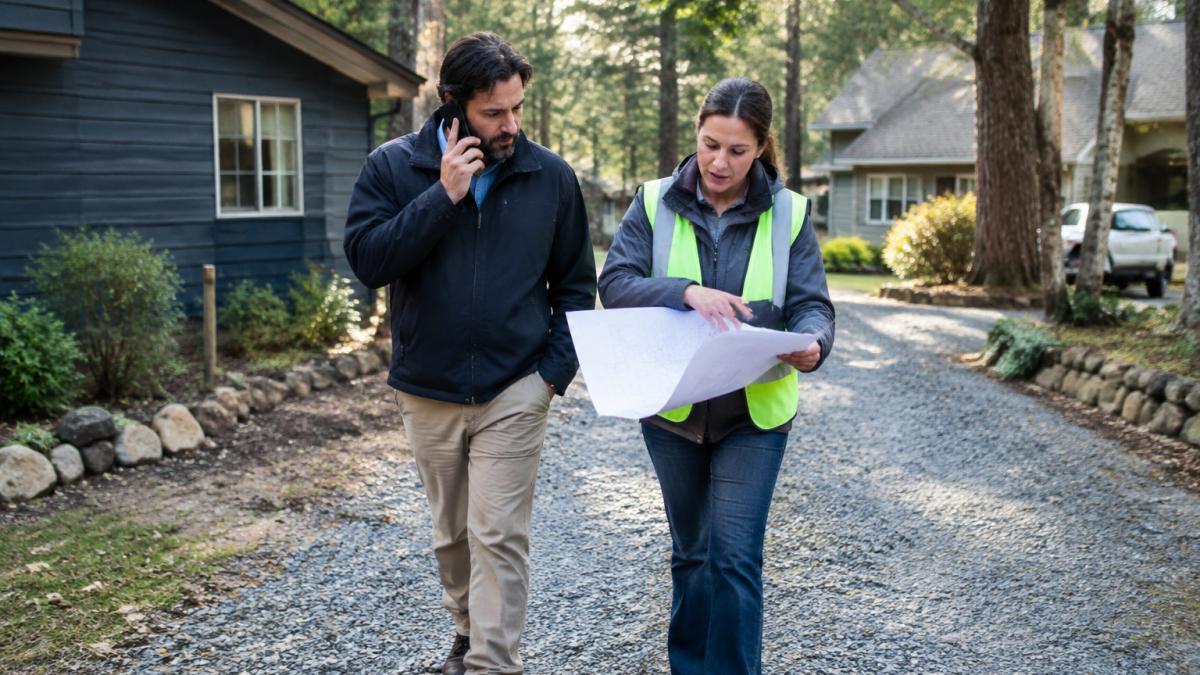
Confirm the scope by asking:
- What is the permitted use, such as foot traffic, vehicles, or utilities?
- Is the easement a fixed strip or a general right of way?
- Does the grant describe any restrictions on width, hours, or type of vehicle?
Compare what the documents allow with what is actually happening. Gaps between the two are the core of most disputes.
Step 3: Build an Evidence File and Documentation Timeline
A written record makes every later step stronger. Keep a single folder, digital or paper, with: documentary proof of fraud
- Copies of all recorded documents and the survey
- Dated photos and video of the disputed use or obstruction
- A timeline of each incident, with dates and times
Watch out: Do not confront the other party in anger or post accusations online. Those messages can later be used against you.
Step 4: Send a Written Easement Dispute Letter to the Neighbor
A clear letter often resolves a problem before it escalates. Keep it factual and calm. Include:
"Our recorded easement, [recording reference], grants access for [permitted use] across [described area]. The current [obstruction or use] appears to exceed that grant. Please stop [specific conduct] by [date] or contact me to discuss a solution."
Send it by a method you can prove, such as certified mail, and keep a copy. Ask for a response within a set time, usually two to four weeks.
Step 5: Address Driveway Easement Abuse and Urgent Obstruction
Some easement problems cannot wait for a two-week response window. If a neighbor blocks a shared driveway, parks across an access route, stacks materials over a utility easement, or builds a fence across a recorded right of way, treat it as urgent from day one. The goal is to create a dated record and restore access without escalating the relationship more than necessary.
What counts as urgent
Urgency usually turns on whether the obstruction affects a legally protected interest rather than mere convenience. Common urgent scenarios include:
- The only vehicle access to your home or garage is blocked.
- Emergency vehicles, deliveries, or caregivers cannot reach the property.
- A utility easement is obstructed in a way that risks service or safety.
A dispute over mowing, parking frequency, or minor encroachment is annoying but rarely urgent. A locked gate across the sole access road is a different matter.
Document the obstruction the same day
Start a dated record before you send anything. Photograph the obstruction from multiple angles, including a wide shot that shows the surrounding property and a close shot of any signage, lock, vehicle, or structure.
Keep a running timeline that pairs each photo with a one-line description. Keeping the record factual also means confirming the legal basis for access before taking further steps, so verify property easements when the dispute may involve an accessory dwelling unit.
Watch out: Angry texts, social media posts, or confrontations at the property line are routinely pulled into later court filings, so keep every communication factual and in writing.
Send the demand letter immediately
For an urgent blockage, send the written dispute letter the same week rather than waiting. State the recording reference for the easement, describe the specific obstruction, identify the harm (for example, inability to reach the garage), and set a short deadline such as 48 to 72 hours. Send it by a method that proves delivery, such as certified mail with return receipt, and keep a copy.
Ask counsel about temporary and emergency relief
When access is blocked and the neighbor will not respond, a real estate attorney can evaluate whether to seek a temporary restraining order or a preliminary injunction. These are court orders that can require the other side to remove an obstruction or stop interfering while the case proceeds.
An attorney seeking emergency relief typically relies on the recorded easement, the survey, the dated photo log, the demand letter, and a declaration describing the impact on access. Ask counsel specifically about:
- Whether your state and county require pre-filing notice to the other side.
- How quickly a judge in your jurisdiction typically hears an emergency motion.
- Whether a bond or other security may be required.
Do not wait months for a response if access to your home is genuinely cut off. Courts treat immediate access problems differently from ordinary disagreements, and delay can weaken the urgency argument.
Step 6: Choose Mediation, Negotiation or Litigation
Once you have the recorded documents, a survey, and a response (or silence), the next decision is which path fits the specific problem. Most guides list the three options without explaining how to choose between them. A more useful approach is to compare them on the factors that actually drive outcomes: urgency, cost, relationship impact, enforceability, and the likelihood of resolving the particular issue.
Compare the three paths on the factors that matter
- Negotiation is a direct conversation or exchange of letters between the parties, sometimes with attorneys involved. It is usually the least expensive and fastest path, and it preserves the neighbor relationship best. Its weakness is enforceability: a handshake or an informal email is hard to enforce later, so any agreement should be written down and, where appropriate, recorded.
- Mediation brings in a neutral third party who helps the parties reach a written agreement. It is typically faster and less expensive than litigation, and it gives both sides a chance to explain their position. Mediation is voluntary in the sense that neither side is forced to settle, but a signed settlement agreement can be enforced. It works best when both sides want to preserve the relationship and the dispute is mostly about scope, maintenance, or cost-sharing rather than a fundamental denial that the easement exists.
- Litigation means filing a lawsuit and asking a court to interpret the easement, order the other side to stop interfering, or award damages. It is the most expensive and slowest path, and it usually damages the neighbor relationship. It is the right choice when the other side refuses to cooperate, when access is blocked and urgent relief is needed, or when a court order is required to make the other side comply.
Use a decision tree keyed to your situation
Ask these questions in order:
- Is access blocked or property being damaged right now? If yes, consult an attorney about temporary or emergency relief first, then decide on the longer-term path. Urgency overrides the usual preference for negotiation.
- Does the other side acknowledge the easement exists? If the existence is disputed, mediation and litigation become more likely because negotiation rarely resolves a fundamental disagreement about whether a right exists at all.
- Is the dispute about a small, specific issue such as parking frequency, gate hours, or minor maintenance? Try negotiation first with a written proposal and a deadline.
- Has negotiation failed, but both sides still want to settle? Choose mediation, and ask whether the mediator has experience with real property matters.
- Is the other side ignoring written demands, or do you need an enforceable order? Consult an attorney about litigation.
Weigh cost, time, and relationship impact
Negotiation and mediation generally cost far less than litigation and resolve faster, but they depend on the other side's willingness to participate. Litigation can produce a binding court order and a clear interpretation of the easement, but it takes longer, costs more, and usually ends the neighbor relationship. Litigation can cost more than the easement is worth to the parties, so ask any attorney for a realistic estimate of fees and timeline before filing.
Follow through after settlement
After any settlement, put the terms in writing and record the agreement with the county recorder so future owners are bound by it. Clarify access hours, permitted uses, maintenance responsibilities, cost-sharing, and what happens if the agreement is violated.
Litigation timelines vary by state and court, so ask any attorney to walk you through the likely schedule for your case before you commit to a path.
Booking a Consultation About Your Easement Problem
If your easement dispute has reached the point where letters and conversations are not working, a consultation can help you understand your options.
Call now for a free consultation.
Frequently Asked Questions
How do you resolve an easement dispute?
Start by reviewing the recorded deed, title report and plat map to confirm the easement's location and scope. Then gather photos, dated notes and any prior correspondence, and send a clear written letter to the other owner describing the problem and asking for a specific fix. If direct talks fail, mediation through a neutral third party is often faster and cheaper than court. Litigation is the final option when the other side will not comply. A California real estate attorney can review your documents and explain which route fits your facts.
Who is responsible for clearing an easement?
The answer depends on the terms of the easement document and on California law. Many recorded easements state who maintains the path and who pays for repairs, while others are silent. When the document is unclear, the dominant estate owner (the party who benefits from the easement) usually has the right to maintain it reasonably, but the servient owner (whose land is burdened) generally may not block or interfere with that use. Review the recorded instrument first, and consult an attorney if the language does not settle the question.
How can you void or terminate an easement?
An easement can end in several ways, including a written release signed by the easement holder and recorded with the county, merger when the same owner later holds both properties, abandonment when the holder clearly stops using it, or a court order. Each route has its own requirements and proof standards. Recording a release is the cleanest method when both parties agree. If the holder refuses, a quiet title or declaratory relief action may be necessary, and you should speak with a real estate attorney before filing anything.
What should you do if a neighbor is abusing a driveway easement?
Document the abuse with dated photos and video, keep a log of each incident, and confirm the scope of the easement in the recorded documents. Send a written letter asking the neighbor to stop the specific conduct. If the abuse blocks access, parks vehicles on the path, or creates a safety hazard, an attorney can advise you on temporary injunctive relief to restore access quickly. Avoid self-help measures such as removing their property or blocking their access in return, because that can expose you to liability.