 how-to
Real Estate Partnership Dispute Attorney: 2026 Guide
Table of Contents
- What a Real Estate Partnership Dispute Attorney Actually Does
- Types of Real Estate Partnership Disputes and When They Escalate
- Breach of Fiduciary Duty in a Real Estate Partnership
- Real Estate Partnership Agreement Dispute Resolution: Step by Step
- Partition Action in California: Forcing a Property Division
- Tax Implications of Partnership Dissolution and What to Watch For
- Preventative Partnership Agreements That Reduce Litigation Risk
- Frequently Asked Questions
Last Updated: August 29, 2026
What a Real Estate Partnership Dispute Attorney Actually Does
A real estate partnership dispute attorney is a litigation specialist who represents business partners, LLC members, and joint venture investors when shared property interests collide. At the Law Offices of Allen Farshi, we've spent over 25 years handling exactly these conflicts, what starts as a handshake deal or hastily drafted LLC operating agreement becomes a legal crisis when money gets tight or one partner stops pulling their weight.
A partnership dispute attorney analyzes controlling documents, partnership agreements, buy-sell agreements, operating agreements, and title records to identify each party's contractual rights and ownership interest. The attorney advises whether the dispute is best resolved through mediation, arbitration, or litigation, and builds the evidentiary record needed to support any path forward.
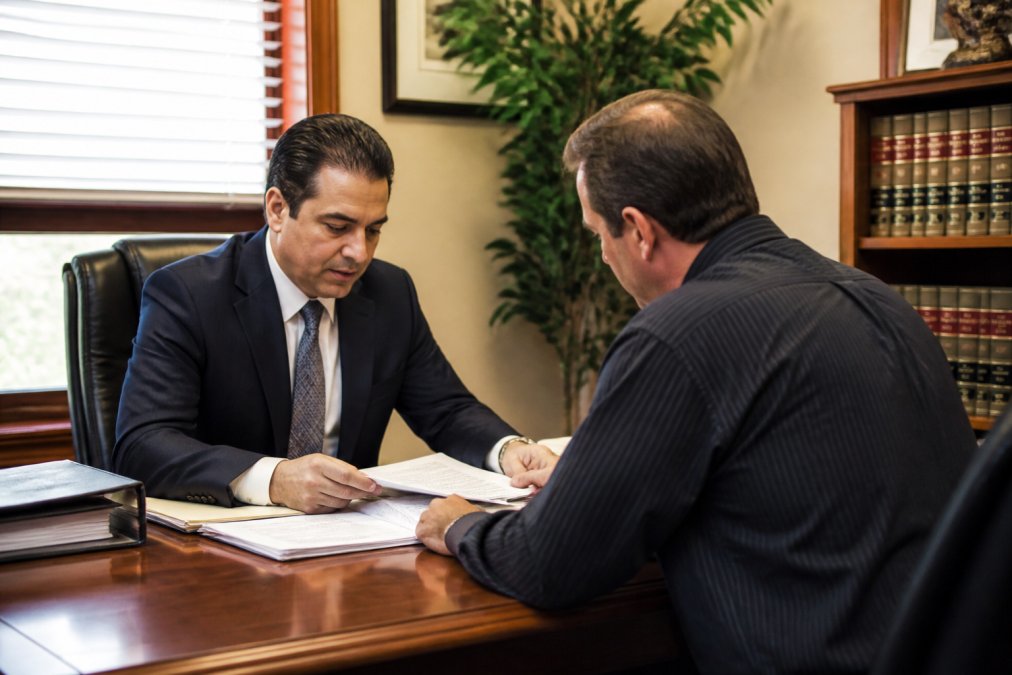
These disputes escalate quickly. A disagreement over property management decisions can morph into a breach of fiduciary duty claim. A missed capital contribution can trigger a forced buyout under a buy-sell agreement. The attorney's job is to protect your ownership interest, enforce your contractual rights, and pursue equitable remedies that courts can impose when money damages aren't enough.
Types of Real Estate Partnership Disputes and When They Escalate
Most partnership disputes fall into recognizable patterns. Understanding which category applies determines the right legal strategy.
| Dispute Type | Common Trigger | Primary Legal Theory | Typical Resolution Path |
|---|---|---|---|
| Breach of contract | Missed payments, unauthorized decisions | Contract law | Negotiation, arbitration, litigation |
| Breach of fiduciary duty | Self-dealing, hidden profits | Equity / partnership law | Litigation, damages, injunctive relief |
| Joint venture / commercial RE | Profit distribution disputes | Operating agreement terms | Mediation, buyout, dissolution |
| Lease / landlord-tenant | Lease violations, rent disputes | Landlord-tenant law | Demand letters, unlawful detainer |
| Construction defects | Defective work, cost overruns | Contract, tort law | Expert-driven litigation |
Breach of Contract and Ownership Interest Conflicts
Breach of contract is the most common entry point into real estate partnership litigation. One partner fails to contribute capital on schedule, makes a unilateral decision to encumber the property without consent, or signs a lease that violates the partnership agreement's approval requirements.
The core question is whether the violated provision was material. Courts examine the partnership or LLC operating agreement, the parties' course of dealing, and any written modifications. According to California Courts self-help guidance on contract disputes, breach of contract claims require proof of a valid contract, performance by the plaintiff, breach by the defendant, and resulting damages. The statute of limitations for written contracts in California is four years.
Commercial Real Estate and Joint Venture Disputes
Commercial real estate disputes involve higher stakes and more complex documents. Joint venture agreements frequently contain provisions for waterfall distributions, preferred returns, and promoted interests that become flashpoints when a project underperforms.
Profit distribution disputes are especially contentious. When a managing partner controls the books and one partner believes the accounting doesn't reflect actual economics, a partnership accounting action may be necessary to compel disclosure. Conflict of interest claims arise when a managing partner steers business to affiliated entities at above-market rates, a classic breach of fiduciary duty.
Lease and Landlord-Tenant Conflicts in Partnerships
Lease conflicts within partnerships surface when partners disagree about whether to renew, renegotiate, or terminate a commercial lease, or when one partner is the landlord and another is the tenant. Lease negotiation disputes can stall an entire investment if partners cannot agree on terms.
Breach of Fiduciary Duty in a Real Estate Partnership
Breach of fiduciary duty separates ordinary business disagreements from serious legal violations. In a real estate partnership, every general partner and, in many LLCs, every managing member owes fiduciary duties to other partners: the duty of loyalty and the duty of care.
The duty of loyalty prohibits self-dealing. A managing partner who routes a profitable property sale to a personally controlled entity or takes a business opportunity belonging to the partnership has breached this duty. The duty of care requires partners to act with the diligence a reasonable person would apply in managing partnership assets.
Courts can award compensatory damages, disgorgement of profits improperly obtained, and injunctive relief to stop ongoing violations. In egregious cases, punitive damages are available.
Evidence of fiduciary duty breaches often lives in financial records. Forensic accounting, tracing capital contributions, distributions, and management fees, frequently uncovers misconduct that a partner suspected but couldn't prove.
Real Estate Partnership Agreement Dispute Resolution: Step by Step
Resolving a real estate partnership dispute requires a clear sequence of decisions. Jumping straight to litigation without exhausting pre-litigation options wastes money and goodwill. Being too patient while a partner dissipates assets is equally damaging.

Here is the practical roadmap:
- Review the controlling documents. Pull the partnership agreement, LLC operating agreement, and any buy-sell agreement. Identify dispute resolution clauses, notice requirements, and deadlines.
- Send a formal demand. A written demand letter from an attorney establishes the record, triggers any contractual cure periods, and signals seriousness.
- Attempt negotiated resolution. Direct negotiation between counsel resolves many disputes before formal proceedings begin.
- Invoke mediation or arbitration. If the agreement requires it, or if both parties agree, a neutral third party can facilitate resolution without trial.
- File for injunctive relief if assets are at risk. If a partner is dissipating assets or transferring property, a court can issue a temporary restraining order on an emergency basis.
- Proceed to litigation. If all else fails, file suit. Strategy should be shaped by evidence strength, financial exposure, and realistic outcomes.
Mediation and Arbitration Before Litigation
Mediation is a voluntary, non-binding process in which a neutral mediator helps parties reach settlement. It preserves the business relationship better than litigation and typically costs far less. Many commercial real estate partnership agreements include mandatory mediation clauses before suit can be filed.
Arbitration is binding, quasi-judicial, and governed by the agreement's arbitration clause or, absent one, by the California Arbitration Act under the Code of Civil Procedure. Arbitration awards are difficult to appeal, which cuts both ways, a strong case benefits from finality, but a weaker position has fewer options if the award goes against you.
Cost-Benefit Analysis: Litigation vs. Settlement
Litigation is expensive. Taking a real estate partnership dispute through trial, including attorney fees, expert witnesses, depositions, and court costs, can be substantial. The timeline from filing to verdict in California state court often runs two to three years.
The cost-benefit calculation depends on the size of the ownership interest at stake, the strength of evidence, the financial resources of the opposing party, and whether attorney fee-shifting provisions exist in the agreement. Many partnership agreements include prevailing party fee clauses, which change the calculus significantly.
Settlement provides certainty. A negotiated buyout of one partner's ownership interest, structured correctly, can resolve the dispute, preserve asset value, and avoid the unpredictability of a jury or judge deciding the outcome.
Partition Action in California: Forcing a Property Division
A partition action is a legal proceeding that forces the division or sale of co-owned real property when owners cannot agree. Under California's Partition of Real Property Act, any co-owner has the right to bring a partition action regardless of what other owners want.
California courts prefer partition by kind, physically dividing the property, but for most commercial real estate, partition by sale is the practical result. The court orders the property sold and proceeds distributed according to each party's ownership interest, after accounting for offsets owed between parties.
Partition actions are powerful but signal that the partnership relationship is over. For investors who want to preserve the asset or continue the investment, a negotiated buyout is almost always preferable. Partition should be considered when negotiation has genuinely failed and one partner is blocking any other resolution.
Tax Implications of Partnership Dissolution and What to Watch For
Partnership dissolution creates tax consequences many investors don't anticipate. The general rule under federal tax law is that a partner recognizes gain or loss when the partnership distributes property or cash in liquidation, measured against the partner's adjusted basis in the partnership interest.
Several specific issues arise in real estate partnership dissolutions:
- Depreciation recapture. Dissolution may trigger recapture of previously claimed depreciation as ordinary income rather than capital gain.
- Hot assets. Partnership interests that include unrealized receivables or inventory items can convert what looks like capital gain into ordinary income.
- Installment sale treatment. If one partner buys out another over time, installment sale rules may apply, spreading gain recognition across multiple tax years.
- Basis adjustments. A Section 754 election, if in place, can allow the purchasing partner to step up the basis of partnership assets, reducing future taxable gain.
As noted by IRS guidance on partnership distributions and liquidations, the tax treatment of partnership liquidations is complex and depends heavily on the specific transaction structure. Always coordinate with a tax advisor before finalizing any dissolution agreement.
Preventative Partnership Agreements That Reduce Litigation Risk
The most effective way to handle a real estate partnership dispute is to prevent it. A well-drafted partnership or LLC operating agreement anticipates common conflicts and provides clear, enforceable mechanisms for resolving them.
The provisions that matter most:
- Buy-sell agreements. A properly structured buy-sell agreement, sometimes called a shotgun clause, allows one partner to offer to buy the other's interest at a stated price, with the other partner required to either accept or buy the offeror out at the same price. This eliminates standoffs.
- Decision-making authority. Specify which decisions require unanimous consent, which require a supermajority, and which the managing partner can make unilaterally. Ambiguity here is the single biggest driver of partnership disputes.
- Capital call provisions. Define what happens when one partner cannot or will not meet a capital call. Dilution formulas, forced buyouts, and loan mechanisms should be spelled out.
- Dispute resolution clauses. Require mediation before arbitration, and arbitration before litigation. Specify the forum, governing law, and fee allocation.
- Exit provisions. Address what happens on the death, disability, bankruptcy, or voluntary withdrawal of a partner. Leaving these events unaddressed creates litigation risk.
As documented in guidance on LLC operating agreements from the California Secretary of State, California LLCs are governed primarily by their operating agreements, not by default statutory rules. The more comprehensive the agreement, the less room there is for a court to impose an unwanted outcome.
A common mistake is treating the partnership agreement as a formality to sign and forget. Partners who avoid litigation revisit their agreements when circumstances change, new properties, new investors, new debt structures, and update the documents accordingly.
Real estate partnership disputes don't resolve themselves. The longer a conflict festers without legal intervention, the more value gets destroyed in the asset, the relationship, and the legal position of the partner who waits. The Law Offices of Allen Farshi brings over 25 years of aggressive litigation experience to these disputes, with the trial advocacy skills to take a case the distance when settlement isn't possible. Whether the issue is a breach of fiduciary duty, a forced partition, or a commercial lease conflict, our firm provides the comprehensive legal representation these matters demand. Contact the Law Offices of Allen Farshi to discuss your partnership dispute and understand your options before the situation gets worse.
Frequently Asked Questions
Q: What kind of lawyer handles disputes between real estate partners?
A: A real estate partnership dispute attorney handles these cases. This lawyer combines property law knowledge with business litigation experience to address conflicts inside LLCs, joint ventures, and general partnerships that co-own real estate. They handle breach of fiduciary duty claims, partition actions, partnership dissolution proceedings, and contract disputes. Look for an attorney with specific trial experience in both real estate and business litigation.
Q: What are the most common causes of real estate partnership conflicts?
A: Most conflicts trace back to four sources: a vague or missing LLC operating agreement or partnership agreement; disagreements over profit distributions and partnership accounting; one partner making unauthorized decisions about the property, such as refinancing or selling; and breach of fiduciary duty where one partner puts personal interests ahead of the partnership. Construction defect claims and disputes over capital contributions are also frequent triggers. A clearly drafted buy-sell agreement and defined decision-making authority prevent many of these conflicts before they start.
Q: Is mediation an effective way to resolve a real estate partnership dispute?
A: Mediation works well when both parties want a negotiated outcome and the dispute centers on economic terms rather than alleged misconduct. It is faster and less expensive than litigation, and settlements reached in mediation are binding once reduced to a written agreement. However, when one partner has committed fraud, breached fiduciary duty, or is hiding assets, mediation may not produce a fair result. In those situations, litigation with access to formal discovery and injunctive relief is often the more appropriate path.
Q: What is a partition action and when does it apply to a real estate partnership?
A: A partition action is a court proceeding that forces the division or sale of co-owned real property when the co-owners cannot agree. Under California law, any co-owner generally has the right to bring a partition action. Courts can order either a physical partition of the property or, more commonly in commercial real estate situations, a partition by sale where proceeds are divided among the owners according to their ownership interests. It is often the final legal remedy when a partnership has broken down completely and one partner refuses to sell or buy out the other.