 How-to
What Happens if Your Insurer Denies a Water Damage Claim in California
Table of Contents
- Why Insurers Deny Water Damage Claims in California
- Reading the Denial Letter and Policy Language
- Building Evidence for the Cause and Timing of the Loss
- Step-by-Step: How to Appeal a Denied Water Damage Claim
- Checklist of Documentation for a California Water Damage Claim
- How Long a Water Damage Claim Stays on Your Insurance Record
- Recognizing Bad Faith Practices and Deciding Your Next Step
- Frequently Asked Questions
Let's look at what happens if insurance company denies water damage claim in California, and how to respond when your insurer says no. Denials are common, and they're not always the final word. Under California insurance rules, you can ask why your claim was denied, challenge that decision, and file a complaint with the California Department of Insurance.
Why Insurers Deny Water Damage Claims in California
When an insurer refuses to pay, the reasons often look similar, and understanding what happens if insurance company denies water damage claim in California starts with knowing those reasons. The most common is that the damage falls outside the policy's covered perils. A policy may cover sudden pipe bursts but exclude slow leaks, or cover damage from rain entering through a roof opening but exclude flooding from the ground.
Denials also happen when the insurer believes the loss was caused by something the policy does not cover, such as neglect, poor maintenance, or a failure to repair a known problem. Many denial letters cite a single exclusion, but the real dispute is often about how the cause of the loss is characterized.
Sudden and accidental damage versus gradual damage
This distinction drives most water damage disputes. Policies typically cover sudden and accidental discharges, like a hose bursting or a supply line failing overnight. They often exclude damage that builds up over weeks or months, such as a slow drip under a sink that rots the subfloor.
A common insurer argument is that the damage was gradual, even when you discovered it suddenly. Keep that in mind when you review the denial, because the wording of the exclusion matters.
Wear and tear, maintenance, and deterioration exclusions
Wear and tear exclusions are among the most frequently cited reasons for denial. Insurers may argue that a failed pipe, corroded fitting, or deteriorated seal simply wore out. Maintenance-based exclusions go a step further and claim the owner should have prevented the loss.
Check whether the insurer identified a specific failed part and linked it to age or lack of upkeep. If the cause is unclear, you can push back and request the evidence the insurer relied on.
Reading the Denial Letter and Policy Language
A denial letter should state the specific policy provision the insurer relied on and explain the reasons. Read it slowly and identify three things: the cause of loss the insurer assigned, the exact exclusion cited, and what documents the insurer reviewed.
Next, pull out your full policy, including endorsements. Endorsements can add or remove coverage, and insurers sometimes overlook them. Compare the language in the denial against the policy wording. If the insurer's explanation doesn't match the policy, that mismatch is your strongest argument.
Create a simple checklist as you review:
- Date of the denial and the date you reported the loss
- The exact exclusion or condition cited
- The cause of loss the insurer assigned
- Any documents or inspections the insurer mentioned
- Whether the letter offers a reconsideration or appeal process
Building Evidence for the Cause and Timing of the Loss
Your strongest response to a denial is evidence. Focus on proving what caused the damage and when it started. Photos and videos taken soon after discovery carry significant weight, especially if they show the water source, the affected area, and the surrounding conditions.
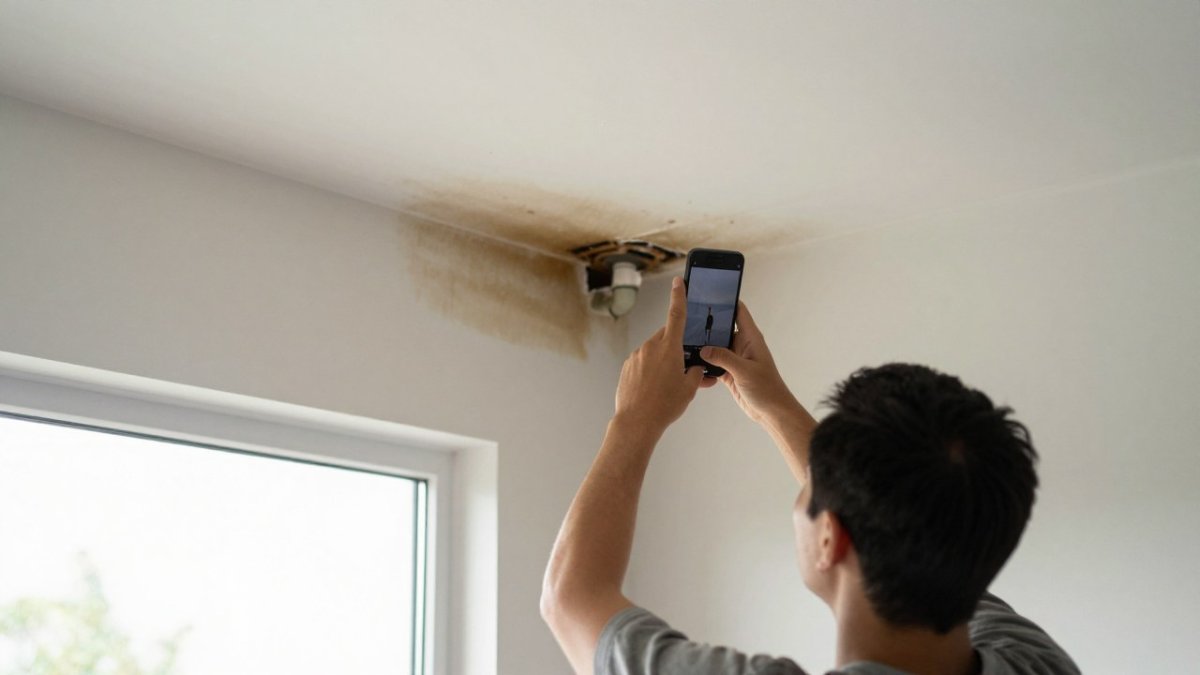
!A homeowner photographing water staining on a ceiling corner with a smartphone, with a damaged section of plumbing pipe visible nearby
Gather plumber invoices, repair receipts, and any prior maintenance records. These documents can show that the pipe was recently serviced or that no earlier leak was reported. If you hired an independent inspector or contractor, ask for a written report that explains the cause and timing of the damage in plain terms.
Keep the damaged materials when safe to do so. A failed fitting or section of pipe can be critical physical proof. Do not discard anything until the claim is resolved.
Step-by-Step: How to Appeal a Denied Water Damage Claim
Follow these steps in order. Each one builds on the last, and the timing matters as much as the substance.
- Request the claim file. Ask your insurer in writing for a complete copy of your claim file, including the adjuster's notes, inspection reports, and any recorded statements. Send the request by email or certified mail and keep the receipt.
- Ask for a written explanation. Request that the insurer explain the denial in writing and cite the exact policy language. A proper denial letter should identify the specific provision relied on, not just a general exclusion category.
- Gather your evidence. Collect photos, repair estimates, plumber reports, and maintenance records. Build a one-page timeline from the date of discovery through the denial.
- Get an independent opinion. A licensed contractor, engineer, or restoration expert can examine the damage and state the likely cause. Ask for a written report that addresses cause and timing in plain terms, because that is the language the insurer will evaluate.
- Submit a written appeal. Send a detailed letter that addresses each reason for denial, quotes the policy language that supports your position, and encloses copies (not originals) of your evidence.
- Track every deadline. Note the dates for filing an appeal and any policy time limits. Missing a deadline can weaken your position, so confirm the timelines in your policy and in any denial letter as soon as you receive it.
- Escalate to the state regulator if needed. If the insurer does not respond fairly, file a complaint with the California Department of Insurance. The California Department of Insurance accepts complaints and can review whether the insurer followed applicable claims-handling rules. Include your policy number, claim number, the denial letter, your appeal, and a short chronology.
- Consider appraisal or legal help. If the dispute is really about the amount of loss rather than coverage, check whether your policy contains an appraisal clause. If it is about coverage or bad faith, a coverage attorney can evaluate next steps.
Watch out: Policies often require prompt notice of loss and may require a sworn proof of loss within a set period. Missing those policy deadlines can make it harder to recover, even when your argument is strong, so confirm the dates in your own policy rather than relying on general timelines.
What to include in the appeal letter
Your appeal letter should be clear and organized. Start with your policy number, claim number, and the date of loss. Then respond to each reason in the denial letter, one paragraph per reason.
Include copies of your evidence, not originals. Quote the policy language that supports your position, and point out any endorsement that adds coverage the adjuster may have overlooked. End by stating what you want the insurer to do, such as reverse the denial, reinspect the property, or pay the claim.
What happens after you appeal
After you submit an appeal, expect the insurer to assign a reviewer, possibly a different adjuster, who may request additional documents or schedule a reinspection. A common pattern is a request for a recorded statement or a second inspection before a decision. If your claim is stalled, learn how to handle insurance claim delays in California while your appeal is pending. Respond promptly and in writing, and keep a log of every contact.
If the insurer upholds the denial, ask for the final position in writing. That letter is useful if you later file a complaint with the California Department of Insurance or consult an attorney. If the dispute is only about the dollar amount of a covered loss, ask whether the policy's appraisal process applies; appraisal is a policy-based mechanism for resolving valuation disputes without litigation, though it does not decide coverage questions.
Checklist of Documentation for a California Water Damage Claim
Gather these documents before you file or appeal:
- Your complete insurance policy, including all endorsements
- The denial letter and any adjuster correspondence
- Photos and videos of the damage, with dates if possible
- Plumber, contractor, or repair invoices
- Independent inspection or engineering reports
- Maintenance records for the plumbing, roof, or affected system
- Records of when you first noticed the damage
- Any damaged materials you kept
- Mitigation records, such as drying and water extraction invoices
- A written timeline of events from discovery through denial
How Long a Water Damage Claim Stays on Your Insurance Record
A water damage claim may remain in insurance claims history, and insurers may consider it when you apply for new coverage. The exact period depends on the insurer and the reporting database involved. Ask your insurer or agent how long the claim will appear and whether it affects your rates.
Resolving the claim fully, including repairs and any appeal, helps protect your record. Keep copies of all closing documents.
Recognizing Bad Faith Practices and Deciding Your Next Step
Not every denial is wrong, but some are handled unfairly. Signs of bad faith include an insurer that refuses to explain its decision, ignores your evidence, delays the investigation without reason, or denies a claim without a reasonable review of the facts. For an overview of insurance bad faith and how it applies to denied claims, start there.
If you see these patterns, document them carefully. Save emails, call logs, and letters that show delays or unexplained decisions. Keep a simple log with the date, the person you spoke with, and what was said. That log becomes useful if you escalate.
Then decide your next step. If you are ready to escalate, learn how to sue for insurance bad faith and the damages and deadlines involved. You generally have three practical paths, and they can be combined:
- Continue the appeal with new evidence. This is often the fastest route when the denial rests on a factual mistake, such as a mischaracterized cause of loss or an overlooked endorsement.
- File a complaint with the California Department of Insurance. The California Department of Insurance reviews complaints about claims handling. It does not award damages or act as your attorney, but it can prompt a fresh review. Submit your policy, denial letter, appeal, and chronology.
- Consult a coverage attorney. An attorney can evaluate whether the denial breached the policy or California claims-handling standards, and can advise on appraisal, negotiation, or litigation.
Call the Law Offices of Allen Farshi for a free consultation to review your denial and discuss your options.
Watch out: legal deadlines apply to filing suit on an insurance claim. Confirm the dates in your policy and any applicable limitations period with an attorney rather than assuming the appeal process pauses the clock.
Frequently Asked Questions
Can insurance deny a water damage claim?
Yes. An insurer can deny a water damage claim when the policy excludes the cause of loss, such as gradual leaks, wear and tear, or lack of maintenance, or when the damage falls outside covered perils. A denial is not automatically final. Read the denial letter closely, identify the specific policy language the insurer relied on, and gather evidence showing when and how the damage happened. You can then request a written reconsideration or file a formal appeal.
How long does a water damage claim stay on your insurance?
A claim may remain in industry claims databases, and insurers may consider it when reviewing future applications or renewals. The exact retention period depends on the insurer and the database. Check your policy and ask your insurer or a consumer resource for how the claim is recorded. Resolving the claim correctly and documenting the outcome matters more than the record alone.
What should I include in an appeal of a denied water damage claim?
An appeal letter should identify your policy and claim number, quote the specific denial reason, and explain why you believe the loss is covered. Attach supporting evidence such as photographs, plumber or contractor reports, repair estimates, maintenance records, and dated correspondence. Keep the letter factual, request a specific outcome, and send it in a way that creates a record, such as certified mail or an email with a read receipt.
Should I hire a lawyer after my water damage claim is denied?
Consider speaking with a California insurance coverage attorney if the denial is large, the reasons seem unsupported by the policy, or the insurer is delaying or refusing to respond. A lawyer can review the policy, evaluate whether the handling may constitute bad faith, and explain your options, including legal action. Many attorneys offer a free initial consultation. Ask about fee structure before you commit.