 How-to
How to Prove Fault in a California Motorcycle Accident
Quick Summary
To prove fault in a California motorcycle accident, preserve scene and physical evidence, obtain and check the police report, collect independent witness statements, and use accident reconstruction. California follows pure comparative negligence, so your recovery is reduced by your own share of fault.
- Photograph both vehicles, road conditions and damage at the scene before anything is moved.
- Ask for a copy of the police report and check lane position and signal color against your photos.
- Get independent witness names and phone numbers at the scene and contact them within a few weeks.
- Reconstruction experts use physics and vehicle damage to show speeds, braking distances and vehicle paths.
- Avoid a recorded statement to the insurer before you understand the facts of the crash.
Table of Contents
- Why Proving Fault Matters After a California Motorcycle Crash
- Step 1: Preserve the Scene and Your Physical Evidence
- Step 2: Obtain and Review the Motorcycle Accident Police Report
- Step 3: Collect Motorcycle Accident Witness Statements
- Step 4: Use Motorcycle Accident Reconstruction to Establish Fault
- How California Comparative Negligence Affects Your Recovery
- Handling Disputed Fault and How Insurers Investigate Your Claim
- Your Next Step: Speak With a California Motorcycle Accident Attorney
- Frequently Asked Questions
How to Prove Fault in a California Motorcycle Accident
Last Updated: November 7, 2026
Why Proving Fault Matters After a California Motorcycle Crash
Proving fault is the single most important task after a motorcycle crash in California. Understanding what evidence matters can help injured riders protect their claims. California follows a comparative negligence system, which means your compensation can be reduced by your share of responsibility. Fault decides who pays your medical bills, lost wages and pain and suffering.
Many riders assume the other driver's fault is obvious. It often is not. Insurers look for any reason to shift blame onto the rider, especially when the rider was on a motorcycle, which is easy to overlook in traffic.
- Fault determines who pays your medical bills and property damage
- Your own share of fault can reduce what you recover
- Early evidence is often lost within days if it is not preserved
Step 1: Preserve the Scene and Your Physical Evidence
Start preserving evidence as soon as it is safe. Our step-by-step checklist for what to do after a car accident walks through the immediate steps, including evidence gathering. Take photographs of the intersection, lane markings, traffic signals, skid marks and debris before anything is moved. Ask the other driver's insurer to keep any dash camera or surveillance footage, since many systems overwrite recordings within days.
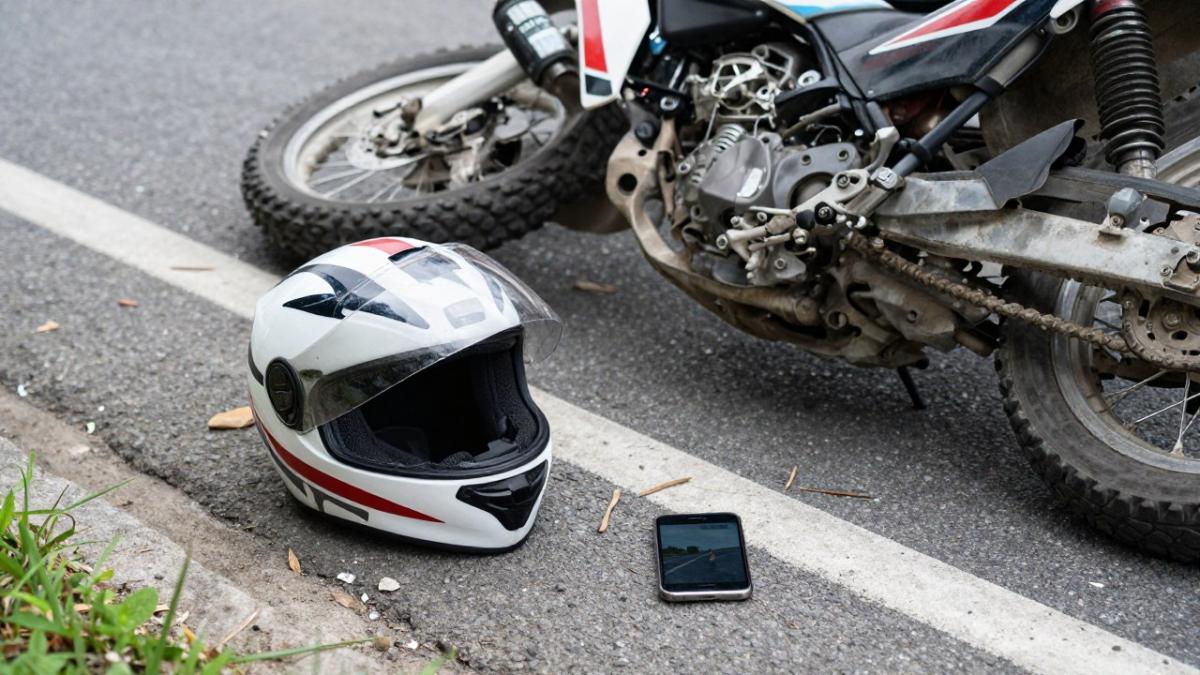
Keep your helmet, riding gear and damaged parts. These items can show impact points and help an expert explain how the crash happened.
Photographs, Video, and Vehicle Damage
Photos taken at the scene are often the strongest early proof. Shoot wide views, close-ups of damage, and the position of both vehicles. Vehicle damage can reveal the direction of impact, which helps establish who entered whose path.
- Photograph both vehicles from several angles
- Capture road conditions, weather and visibility
- Save original files with date data intact
Step 2: Obtain and Review the Motorcycle Accident Police Report
A motorcycle accident police report documents the officers' observations, statements, citations and diagram of the crash. Request a copy from the investigating agency as soon as it is available. Review it closely for errors, since a mistake about lane position or signal color can shift fault.
If the report assigns fault to you, do not assume it is final. Officers often form opinions based on limited information, and a report can be challenged with your own evidence.
The police report is a key document, so these are the main points to check when you review it.
| Item | What to check | Why it matters |
|---|---|---|
| Police report | Request a copy from the investigating agency as soon as it is available | Documents officers' observations, statements, citations and diagram |
| Lane position | Compare against your photographs | Errors can shift fault |
| Signal color | Compare against your photographs | Errors can shift fault |
| Fault assignment | Do not assume it is final | Officers may form opinions from limited information |
| Challenging the report | Use your own evidence | A report can be challenged with your own evidence |
Step 3: Collect Motorcycle Accident Witness Statements
Independent witnesses are valuable because they have no stake in the outcome. Get names and phone numbers at the scene, and write down what each person saw. Witnesses who remember details soon after the crash give the most reliable accounts.
Witness memories fade quickly. Contact them within the first few weeks and ask them to describe the sequence of events in their own words.
Step 4: Use Motorcycle Accident Reconstruction to Establish Fault
Motorcycle accident reconstruction uses physics, vehicle damage and scene measurements to show how the crash happened. A reconstruction expert can calculate speeds, braking distances and the path of each vehicle. This is especially useful when the other driver claims you were speeding or changed lanes suddenly.
Reconstruction can also address common disputes, such as whether a driver could have seen a motorcycle in a blind spot.
How California Comparative Negligence Affects Your Recovery
California is a pure comparative negligence state. Under this rule, a rider's recovery is reduced by the rider's own percentage of fault. Riders worried about filing deadlines can check how to find the statute of limitations for motorcycle accidents. Anyone reviewing a specific claim should confirm the current statutory and case-law basis with a qualified attorney or the official California sources.
Fault is not always split between just two people. A crash can involve the other driver, a second motorist who forced the rider into a lane, a public entity that left a dangerous condition on the roadway, or a manufacturer whose defective part contributed to the crash. California allows a defendant to name other parties and even non-parties as responsible, and the jury can assign percentages to each. In practical terms, an underinsured or judgment-proof defendant can leave a rider unable to collect the full award from any one source, which is why identifying every responsible party early matters. Because recovery may depend on which responsible parties can pay, California liability insurance requirements are another factor to consider when assessing the sources available to compensate an injured rider.
Watch out: insurers sometimes push a recorded statement early in the claim. Speaking before you understand the facts can give them a quote they later use to assign you fault.
Medical records should link your injuries directly to the crash, not to prior conditions. A gap in treatment or a pre-existing injury to the same body part is one of the most common ways an insurer argues the rider's damages, and sometimes the rider's credibility, should be reduced.
Handling Disputed Fault and How Insurers Investigate Your Claim
Insurance companies investigate fault by reviewing the police report, photographs, witness statements, vehicle data, and their own recorded statements. Readers can see how insurers differ from attorneys in handling car accident claims in Lawyer vs Insurance Company. A rider who understands the investigation sequence can get ahead of it.
Evidence disappears on a schedule. Traffic-camera footage, business surveillance and vehicle data may be overwritten or lost on short schedules, depending on the agency, business or vehicle. Phone records and app data may require a preservation letter to the carrier and, in some cases, a subpoena. Send written preservation requests to the investigating agency, nearby businesses, and the other driver's insurer as soon as possible, and keep proof that each request was sent.
When witnesses disagree, the police report is incomplete, or the other driver blames the motorcyclist, the strongest response is to build a timeline from independent sources. Scene photographs with timestamps, helmet or dash camera footage, vehicle damage patterns, and reconstruction measurements can resolve conflicts that witness memory cannot. If the report assigns fault to the rider, do not assume it is final. Officers often form opinions from limited information, and a report can be challenged with your own evidence. Ask the investigating agency for the full report, including the diagram and any supplemental narratives, and compare the officer's description of lane position and signal color against your photographs.
If an insurer denies your claim or offers far less than your losses, ask for the specific reason in writing (Create Complaint). Keep copies of every letter, email, and phone log, and note the date, time, and name of each person you speak with. A written record of the insurer's stated reasons makes it harder for the adjuster to change the story later.
Watch out: a quick settlement offer before you have finished treatment may be made before the full extent of your injuries and lost income is known.
Your Next Step: Speak With a California Motorcycle Accident Attorney
Proving fault takes time, and deadlines can limit your options. Auto accident injuries, Insurance bad faith, HOA law offers contingency-based representation for injury and insurance cases, which means no attorney fees unless damages are recovered. Personal Injury Lawyer in California: What to Know covers what a personal injury lawyer does and how to choose one.
Call now for a free consultation to discuss your case. Before signing, you can review how contingency fees work and what gets deducted from a settlement.
Frequently Asked Questions
What evidence can prove fault in a motorcycle accident?
Strong evidence in a motorcycle accident usually includes the police or collision report, witness statements, photographs and video of the scene, vehicle damage and physical evidence such as skid marks and debris, traffic camera footage, and medical records linking the crash to your injuries. Preserving this evidence early matters because footage is often overwritten and witnesses become harder to reach over time. A motorcycle accident attorney can help you identify which pieces matter most for your specific crash.
How is fault determined in a California motorcycle accident?
California follows a comparative negligence system, which means fault is assigned by percentage. Investigators and courts look at traffic laws, right of way, lane position, visibility, and each driver's conduct to decide who caused the crash. Your compensation can be reduced by your own share of fault, so documenting the other driver's negligence is central to a claim. The exact analysis depends on the facts, so review your situation with a qualified attorney.
Can a police report prove who caused a motorcycle accident?
A police report is an important source of evidence, but it does not automatically decide fault. Officers record their observations, statements from drivers and witnesses, and sometimes a citation, but their conclusions can be disputed or incomplete. Insurers and courts weigh the report alongside other evidence. If the report contains errors, you can request corrections or supplement it with your own documentation.
What should I do to preserve motorcycle accident evidence?
Photograph the scene, your motorcycle, your gear, and your injuries as soon as it is safe, and write down your recollection of events while it is fresh. Request preservation of traffic camera footage and vehicle data promptly, since these records can be deleted on short schedules. Keep your helmet and damaged gear, save medical records, and get the names and contact information of any witnesses. Acting quickly strengthens your ability to prove fault.