 How-to
How to Report a Car Accident to California Insurance
Table of Contents
- Steps to Take Immediately After a Collision
- How Long to Report a Car Accident to Your Insurance Company
- When a Police Report Is Required and How It Differs From an SR-1
- Filing the California DMV SR-1 Accident Report
- How to Report a Car Accident to California Insurance Online
- Reporting a Minor Accident With No Injuries
- Documenting the Accident and Preparing for Your Insurer's Questions
- Your Next Step After Reporting the Accident
- Frequently Asked Questions
How to Report a Car Accident to California Insurance
Last Updated: November 18, 2026
Steps to Take Immediately After a Collision
Reporting a car accident to your insurer starts at the scene, not on the phone. Strong notes from the first hour make every later conversation easier. You can review a complete checklist of what to do at the scene and right after the crash before you contact your insurer.
Stay calM, check for injuries, and move to safety if the vehicles can be moved. Call 911 if anyone is hurt, and get medical care even if you feel fine.
Gather the basics before you leave the scene:
- Driver information: name, phone, address, and license number
- Insurance details: the other driver's insurer and policy number
- Vehicle details: make, model, color, and license plate
- Scene evidence: photos of vehicle damage, the road, traffic signs, and skid marks
- Witnesses: names and phone numbers of anyone who saw the crash
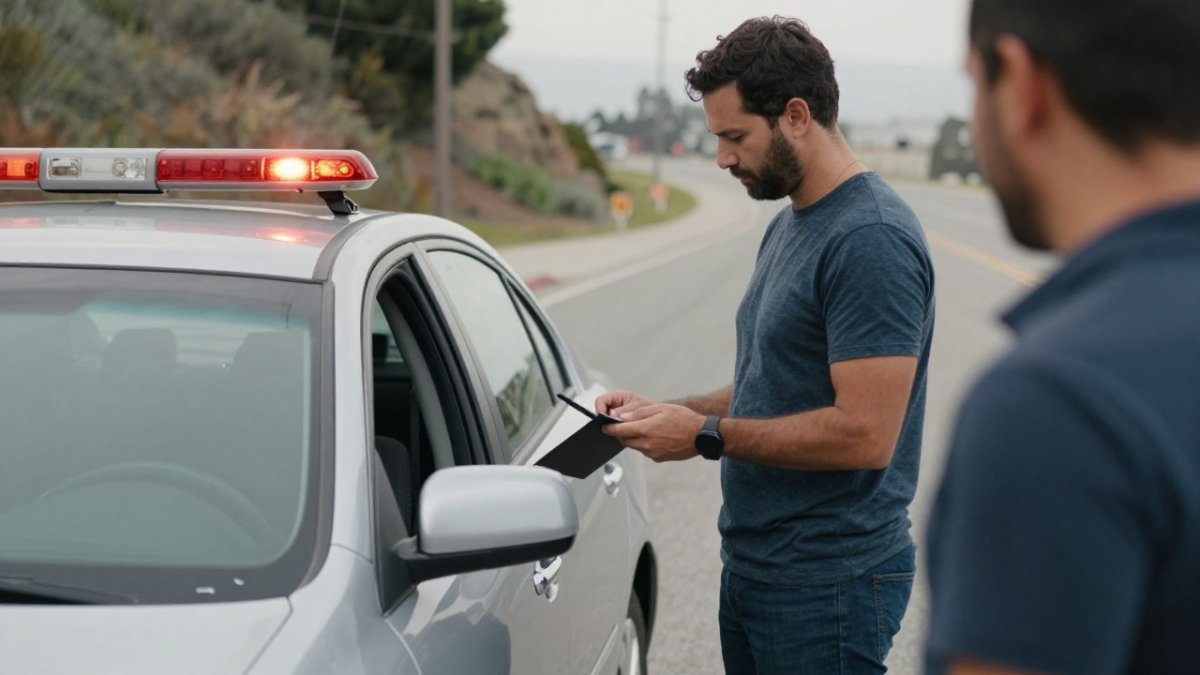
!Driver standing beside a parked sedan on a California roadside, exchanging contact information with another driver, hazard lights visible
Watch out: Do not admit fault at the scene. Simple apologies can be used later as evidence, even when the other driver caused the crash.
How Long to Report a Car Accident to Your Insurance Company
Report the accident to your own insurer as soon as reasonably possible. Many policies require prompt notice, and waiting too long can cause problems with your claim.
Legal filing deadlines are separate from insurance reporting. You can confirm the California filing deadlines for car accident claims so you do not miss them. Check the official California limits before you assume you have time. California Department of Insurance consumer claims guidance
When a Police Report Is Required and How It Differs From an SR-1
A police report and the DMV SR-1 are different documents. Many California crashes need only the SR-1, while some situations also call for a police report. Confirm which applies to your accident before you rely on either one. California Vehicle Code reporting requirements
Filing the California DMV SR-1 Accident Report
The SR-1 is the form drivers use to report certain collisions to the Department of Motor Vehicles. It is a state filing, not an insurance claim, and the two run on separate tracks. Understanding which track you are on prevents the most common mistake: assuming that calling your insurer satisfies the DMV, or that mailing the SR-1 satisfies your policy's notice requirement.
When the SR-1 is required. California law requires certain collisions to be reported to the Department of Motor Vehicles on the SR-1 form. Check the current statutory requirements on the official DMV website before relying on any deadline or dollar threshold.
Who files. Every driver involved in a reportable crash files a separate SR-1, even if the other driver was at fault. Passengers and pedestrians do not file. If the driver is under 18, the parent or guardian signs. If the driver is physically unable, a representative may file on their behalf with an explanation attached.
What the form asks for. The SR-1 collects:
- Your name, address, date of birth, and driver's license number
- The vehicle identification number, license plate, and insurance policy details for each vehicle
- The date, time, and location of the crash
- A narrative of what happened and a diagram of the vehicle positions
- Injuries, fatalities, and whether a police report was taken
- The responding agency and report number, if one exists
Fill in every field completely.
How to file: online portal vs. paper. The SR-1 can be submitted through official DMV channels. Check the DMV website for the current filing options and instructions.
What happens after you file.
Watch out: Do not wait for a police report to arrive before filing the SR-1. Confirm current filing deadlines on the official DMV site.
California DMV SR-1 report of traffic accident
How to Report a Car Accident to California Insurance Online
Many insurers accept first notice of loss through several channels, such as a mobile app, web portal, or phone line. The practical anxiety most drivers have is not the form itself, it is whether reporting will raise their rate. The answer depends on which report you are filing. The SR-1 goes to the DMV and is a compliance record. The first notice of loss goes to your insurer and is a claim record. They are not the same event, and filing one does not automatically file the other.
Step 1: Decide which report you are making. If you are filing a claim for your own damage or injuries, you are opening a first-party claim. If you are pursuing the other driver's insurer, you are opening a third-party claim against their policy. If you are only complying with the DMV, you are filing the SR-1 and may not need to open a claim at all, though most policies still require prompt notice of any accident, so read your policy's notice clause before deciding to stay silent.
Step 2: Gather the same facts for every channel. Have these ready before you start, whether you are on the app, the portal, or the phone:
- Your policy number and the policyholder's name
- The date, time, and location of the crash, including the nearest cross street
- The other driver's name, license number, insurer, and policy number
- Photos of damage, the scene, and any visible injuries
- The police report number and responding agency, if one exists
- Names and contact information for witnesses
Step 3: File through the channel that fits the situation. Choose the reporting channel that fits your situation, whether that is your insurer's app, web portal, or phone line. Whichever you choose, use the same wording you would use in a written statement, do not speculate about fault or speed.
Step 4: Record the claim number and the adjuster's name. The claim number is the key to every later conversation. Write it down, along with the date, time, and the name of the representative who took your report. If you file online, screenshot the confirmation page.
Step 5: Follow up in writing. After the first notice, send a short email summarizing what you reported and attaching your photos. This creates a dated record and closes the gap between what you said on the phone and what the file reflects.
Watch out: Do not describe the accident differently to the DMV, your insurer, and the other driver's insurer. Inconsistent accounts of the accident can create problems during a claim, so describe events accurately and consistently.
California Department of Insurance consumer claims guidance
Reporting a Minor Accident With No Injuries
A minor crash still needs documentation. Photograph everything, exchange information, and report the claim to your insurer even if the damage looks small.
Documenting the Accident and Preparing for Your Insurer's Questions
Organize your evidence before the adjuster calls. Keep medical records, repair estimates, photos, and written statements in one folder.
Expect questions about how the crash happened, your injuries, and the damage to your vehicle. Answer only what you know, and say so when you do not.
Your Next Step After Reporting the Accident
After you report the accident, review your coverage and keep track of every deadline. If the insurer delays, denies, or offers an amount that seems too low, you have options. Our team at Auto accident injuries, Insurance bad faith, HOA law can review your situation and explain what to expect. You can read more about how to handle a car accident claim with an attorney and your options if the first settlement offer seems too low.
Get the answers you need: Call Auto accident injuries, Insurance bad faith, HOA law for a free consultation and learn how your claim should be handled.
Frequently Asked Questions
How long do you have to report a car accident to your insurance in California?
Most California auto policies require prompt notice of a collision, and many insurers ask for notice as soon as reasonably possible, often within a few days. Waiting too long can give an insurer grounds to question or deny a claim. Check your policy's notice clause and report as soon as you can, even if you are still gathering details. A short initial report followed by fuller details later is usually better than delaying to finish your paperwork.
Does California require a police report for a car accident?
A police report is not always required, but California law requires certain collisions to be reported to the DMV on the SR-1 form. Check the official DMV website for the current requirements and deadlines. Police involvement is required in some cases, such as when a driver is injured or killed. If you are unsure, report the accident to the police and keep the report number, since it helps with both insurance and DMV filings.
What is the difference between reporting an accident to insurance and filing an SR-1?
Reporting to your insurer starts your claim and lets the company investigate fault, coverage, and damages. The SR-1 is a separate report filed with the California Department of Motor Vehicles and is not a claim. Filing with your insurer does not replace the SR-1, and filing the SR-1 does not start a claim. Many drivers need to do both, so keep copies of each submission and any confirmation numbers.
What should I do if the other driver does not have insurance?
Report the accident to your own insurer promptly and ask whether your policy includes uninsured motorist coverage, which may help cover injuries and certain losses. Gather the other driver's name, license plate, and vehicle details, and get witness information if possible. Coverage for pain and suffering can depend on specific circumstances, so review your policy and talk with a qualified attorney about your options.