 How-to
How to Prepare for a Motorcycle Accident Consultation
Last Updated: November 12, 2026
Quick Summary
To prepare for a motorcycle accident consultation, gather your police report, medical records and bills, insurance policy and insurer letters, scene and vehicle photos, witness contacts, lost wage documentation, and a one-page timeline. Write your questions down in advance and describe your injuries and fault honestly, including gaps in what you remember.
- Bring gear photos too, since helmet, jacket, and boot damage often tells a story the bike alone does not.
- Do not delay the meeting to assemble a perfect file; partial records still let an attorney evaluate and preserve evidence.
- Ask how many motorcycle crash cases the attorney has handled and how recently.
- Tell the firm in advance about mobility, hearing, language, or communication needs so accommodations are ready.
- Do not sign a release, recorded statement authorization, or fee agreement unless you understand every term.
Table of Contents
- Start Your Motorcycle Accident Consultation with the Right Mindset
- What to Bring to a Motorcycle Accident Lawyer Consultation
- Your Motorcycle Accident Lawyer Consultation Checklist
- Questions to Ask a Motorcycle Accident Lawyer
- What to Expect at a Motorcycle Accident Lawyer Meeting
- How to Describe Your Injuries, Fault, and Losses Honestly
- How to Document Financial and Non-Economic Losses
- Book Your Free Motorcycle Accident Consultation
- Frequently Asked Questions
Start Your Motorcycle Accident Consultation with the Right Mindset
A motorcycle accident consultation is a working meeting, not a sales pitch. The riders who get the most from that first hour arrive organized, honest, and clear about what they want to know.
At the Law Offices of Allen Farshi, we have over 25 years of experience handling injury and insurance matters.
Below, we break down exactly what to gather, what to ask, and how to describe your crash so the meeting produces real answers.
What to Bring to a Motorcycle Accident Lawyer Consultation
Bring anything that documents the crash, your injuries, and your losses. If you are unsure whether something matters, bring it anyway and let the attorney sort it.
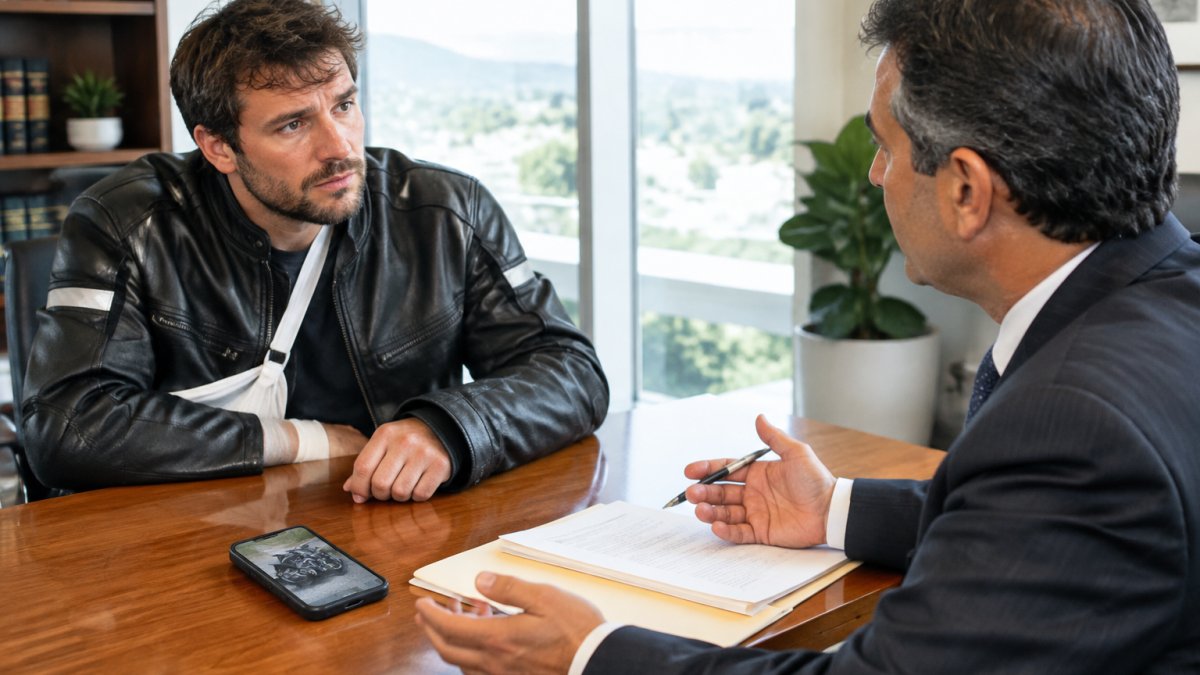
The goal is a complete picture. A single missing record can delay a case evaluation by weeks.
Documents and Evidence to Gather Before the Meeting
Start with a folder, physical or digital, and work through this list:
- Police or accident report and the responding officer's name and report number
- Scene photographs of the motorcycle, the other vehicle, road conditions, and your gear
- Witness names and contact information, even if police already collected it
- Medical records and bills from every healthcare provider you have seen
- Your insurance policy and any letters or emails from the insurance company
If you have already given a recorded statement to an insurer, note the date and what you said. Attorneys need to know what is already on the record.
You can also read more about how to find the statute of limitations for motorcycle accidents before your meeting, since filing deadlines affect how quickly evidence needs to be preserved.
When Records Are Missing or Unavailable
Missing paperwork is common and rarely fatal to a case. Say so at the start of the meeting.
Police reports can take time to process. Some treatment records arrive slowly from hospitals. Witnesses disappear. An experienced attorney can request records directly, subpoena them if needed, and use other evidence to fill gaps.
What you should never do is guess or fill in details you do not remember. Tell the attorney what is missing and why.
Your Motorcycle Accident Lawyer Consultation Checklist
A prioritized checklist helps organize your paperwork. The one below is organized by what to bring, what to prepare, and what to ask, so you can work top to bottom and stop when time runs out.
What to Bring (Highest Priority First)
- Police or accident report and the responding officer's name and report number. If the report is not ready, bring the agency name, date, and any receipt or case number you were given.
- Medical records and bills from every provider, including the emergency room, orthopedist, chiropractor, and physical therapist. Bring discharge papers and any imaging discs.
- Your insurance policy and every letter, email, or text from any insurer. Note the date of any recorded statement you already gave.
- Scene and vehicle photos, including your helmet, jacket, gloves, and boots. Gear damage often tells a story the bike alone does not.
- Witness names and contact information, even if police already collected them.
- Lost wage documentation, pay stubs, an employer letter, or a summary of missed shifts.
- A one-page written timeline of the crash and your treatment so far.
What to Prepare Before You Walk In
- Write a one-page summary of the crash in your own words, including what you remember and what you do not.
- List every injury and symptom, including headaches, sleep problems, and trouble concentrating.
- Total your out-of-pocket costs, lost income, and property damage.
- Note any insurance contact, offer, or denial so far.
- Prepare your questions in writing and bring a pen.
- Ask whether a friend or family member can join you, especially if you have memory gaps or mobility limits.
What to Ask Before You Leave
- How many motorcycle crash cases have you handled, and how recently?
- Who will actually work on my case, and will I speak with you or an assistant?
- How do you charge, and what expenses might I be responsible for?
- What do you see as the strengths and weaknesses of my case?
- What is a realistic timeline, and what could cause delays?
- Are you prepared to take this to trial if the offer is unfair?
When Items Are Missing
Missing paperwork is common and rarely fatal. Bring what you have, write down what is missing and why, and ask the attorney whether the firm can request reports or records directly.
Do not delay the consultation to assemble a perfect file.
Print this checklist, screenshot it, or copy it into your phone notes.
Here is the article's prioritized checklist, organized by what to bring, what to prepare, and what to ask.
| Priority | Item | Note |
|---|---|---|
| 1 | Police or accident report | Include officer's name and report number |
| 2 | Medical records and bills | From every provider, including imaging discs |
| 3 | Insurance policy and insurer letters | Note date of any recorded statement |
| 4 | Scene and vehicle photos | Include helmet, jacket, gloves, boots |
| 5 | Witness names and contact information | Even if police already collected them |
| 6 | Lost wage documentation | Pay stubs, employer letter, or missed shifts |
| 7 | One-page written timeline | Covers the crash and treatment so far |
Questions to Ask a Motorcycle Accident Lawyer
Ask about experience, fees, case strategy, and communication. The answers tell you more about the attorney than any website will.
Come with your questions written down. Injured riders often forget half of what they meant to ask once the conversation starts.
- How many motorcycle crash cases have you handled, and how recently?
- Who will actually work on my case, and will I speak with you or an assistant?
- How do you charge, and what expenses might I be responsible for?
- What do you see as the strengths and weaknesses of my case?
- What is a realistic timeline, and what could cause delays?
- How do you handle insurance company pressure to settle early?
Write the answers down as you go. Compare them later, when the meeting is over and the pressure is off.
What to Expect at a Motorcycle Accident Lawyer Meeting
Expect a structured conversation that covers the crash, your injuries, your losses, and your options. Initial consultations often follow a similar shape, and knowing it in advance can help you participate even when you are in pain or on medication.
How the Initial Consultation Unfolds
The attorney will usually start with open questions about what happened. Then the conversation moves to treatment, medical bills, lost work, and insurance contact so far. Bring your folder and refer to it.
After that, expect a discussion of fault, available coverage, and the strengths and gaps in the evidence. You should leave with a clear sense of whether the firm can help, what the next steps are, and what it will cost you to proceed.
How Long It Takes and How to Participate While Injured
Ask when you schedule so you can plan transportation and rest.
If travel is difficult, ask whether the meeting can be handled by phone or video. Some firms offer remote consultations, and a remote meeting may be preferable to a postponed one.
Watch out: do not sign a release, a recorded statement authorization, or a fee agreement at the meeting unless you understand every term.
What Happens After the Meeting
Some meetings end with a signed agreement. Others end with a request for more records. Either outcome is normal. Ask who calls whom, and by when. If you do not hear back on the promised timeline, call.
Before you leave, confirm the next step in writing, even a short email summary works. What matters is that you understand the plan before you leave the room.
How to Describe Your Injuries, Fault, and Losses Honestly
Tell the truth, including the parts that are inconvenient.
Describe your pain in plain terms. Mention symptoms that seem minor, like headaches, sleep problems, or trouble concentrating (the CDC).
On fault, resist the urge to assign blame or accept it. Describe what you remember seeing and doing.
Never exaggerate and never minimize. Both create problems that are hard to undo.
How to Document Financial and Non-Economic Losses
Track every dollar and every way the crash changed your daily life. Documentation turns a general claim into a specific one.
For economic losses, keep:
- Medical bills and receipts, including prescriptions and equipment
- Pay stubs, tax returns, and employer letters showing missed work
- Repair estimates or photos of property damage
- Mileage and parking costs for medical appointments
For non-economic losses, write it down as it happens:
- Sleep disruption, anxiety, or fear of riding again
- Lost ability to lift, carry, or do household tasks
- Missed family events, hobbies, or social activities
- Changes in mood or relationships
A daily note on your phone works fine. If you are wondering how to claim pain and suffering when medical bills are limited, read suing for pain and suffering without medical bills before your consultation so you know what evidence supports that part of a claim.
Book Your Free Motorcycle Accident Consultation
Preparation is the difference between a meeting that produces answers and one that produces a follow-up call.
If you are unsure how contingency fees work before you commit to a meeting, review how contingency lawyers handle auto accident cases and the guide to contingency fee lawyers for injury claims.
The Law Offices of Allen Farshi offers contingency-based representation for injury and insurance cases, which means no attorney fees unless damages are recovered.
Call now for a free consultation, or use our contact page to schedule.
A crash can leave you hurt, out of work, and facing an insurer that keeps saying no.
Frequently Asked Questions
What should I bring to a motorcycle accident lawyer consultation?
Bring your police report, photos of the crash scene and vehicle damage, witness names and contact information, medical records and bills, your insurance policy, and any correspondence with the insurance company. Also bring a written account of how the crash happened and a list of your injuries and symptoms. If some records are unavailable, bring what you have and note what is missing. The attorney can often request medical records and the accident report directly, so do not delay the meeting while waiting on paperwork.
Can I meet with a motorcycle accident lawyer before I have all my records?
Yes. Most motorcycle accident lawyers will meet with you before every record is in hand, because early evidence can fade and deadlines may apply. Bring what you have, such as the police report, photos, and a list of your healthcare providers. The attorney can send authorization forms to request medical records and bills on your behalf. Waiting for complete documentation can cost you time and evidence, so schedule the consultation and let the firm help gather what is missing.
Should I talk to a lawyer before speaking with the insurance company?
It is wise to speak with a motorcycle accident lawyer before giving a recorded statement to the insurance company. Insurers may ask questions that can be used to reduce your claim, and a recorded statement is difficult to take back. An attorney can explain your rights, handle communications with the insurer, and help you avoid statements that could harm your case. Bring any letters or emails from the insurance company to your consultation so the lawyer can review them.
What questions should I ask a motorcycle accident attorney?
Ask about the attorney's experience with motorcycle crash cases, how the contingency fee works, who will handle your case day to day, and how often you will receive updates. Ask what challenges they see in your case, how long similar cases have taken, and whether they are prepared to go to trial if the insurer will not offer a fair settlement. Also ask what documents they still need from you and what the next steps are after the consultation.